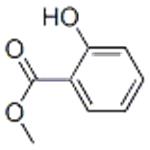
In medicinal use, wintergreen oil is primarily used as a topical erythematous agent, commonly for reducing swelling and relieving pain. However, due to side effects such as affecting the activity of iron ions in the blood, it is now rarely used in oral medications. Wintergreen oil has a local irritant effect, promoting local blood circulation. Topical application or application can produce vasodilation and redness of the skin, reflexively affecting the skin, muscles, nerves, and joints in the corresponding area, thus reducing swelling, inflammation, and pain, and also relieving itching. It can be used for sprains, contusions, back pain, muscle pain, neuralgia, and relieving itching.
Wintergreen essential oil is water steam-distilled from leaves charged into the still and allowed to macerate for several
hours to hydrolyze the gaultherin glucoside (methyl salicylate + glucose). Distillation lasts from 5 to 6 hours and yields approximately
0.7% essential oil. The oil is often adulterated by intentionally co-distilling sweet birth (Betula lenta) bark. FCC (1996) has described
wintergreen oil as obtained from the leaves of G. procumbens and bark of B. lenta. The oil has a strong, sweet, aromatic odor reminiscent
of methyl salicylate, its main constituent.
Wintergreen oil is a colorless, yellowish or reddish liquid. It boils with decomposition between
219 to 224°C. It is soluble in alcohol and in glacial acetic acid, and it is very slightly soluble in water.
Extractives and their physically modified derivatives. Gaultheria procumbens, Ericacenae or Betula lenta, Betulaceae.