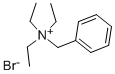
Benzyltriethylammonium bromide is a versatile quaternary ammonium salt widely utilized in various chemical and industrial applications.
white to light yellow crystal powde
Benzyltriethylammonium bromide is recognized for its effectiveness as a phase transfer catalyst, facilitating the transfer of ions between immiscible phases, which enhances reaction rates in organic synthesis. Its ability to solubilize organic compounds in aqueous solutions makes it invaluable in the synthesis of pharmaceuticals, agrochemicals, and fine chemicals. Researchers often leverage its properties in the preparation of quaternary ammonium compounds, surfactants, and as a reagent in organic reactions, such as alkylation and acylation processes.
Benzyltriethylammonium bromide has been used in various applications, including:
Phase
transfer catalysis: The compound has been employed as a phase transfer
catalyst in organic synthesis reactions, facilitating the transfer of
reactants between aqueous and organic phases.
Biomedical
research: Benzyltriethylammonium bromide has been used as a selective
inhibitor of certain enzymes, such as protein kinase C.
Pharmaceutical
applications: The compound has been investigated as a potential
excipient in pharmaceutical formulations, due to its ability to enhance
the solubility and stability of certain drugs.
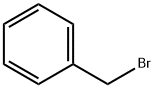
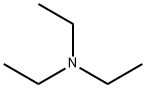
GENERAL METHOD: Benzyl halide (1 eq.) was dissolved in THF (50 mL/g benzyl halide) with reference to the method described in Ref. 4, to which 1.5 eq. of triethylamine (33 wt% ethanol solution) was subsequently added. The reaction mixture was stirred at room temperature for 24 h. The product precipitated as a white solid during the reaction. The resulting suspension was cooled to 0 °C, filtered, and the filter cake was washed with ice-cold ether and finally dried under vacuum to afford the target product benzyltriethylammonium bromide in a yield consistent with literature reports.
[1] Synlett, 2016, vol. 27, # 13, p. 1963 - 1968
[2] Journal of the American Chemical Society, 1980, vol. 102, # 21, p. 6463 - 6465
[3] Journal of Organic Chemistry USSR (English Translation), 1984, vol. 20, p. 1715 - 1723
[4] Zhurnal Organicheskoi Khimii, 1984, vol. 20, # 9, p. 1881 - 1888
[5] Roczniki Chemii, 1965, vol. 39, p. 1223 - 1231