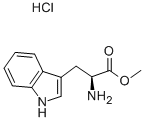
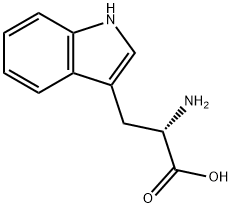
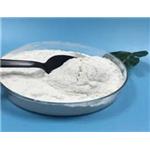
(2) Preparation of L-tryptophan methyl ester hydrochloride: 60 mL of methanol was added to a 100 mL round-bottomed flask under ice bath conditions. Subsequently, 4 mL of sulfoxide chloride (SOCl2) was slowly added dropwise through a constant-pressure dropping funnel (equipped with a drying tube at the top), and NaOH solution was used to absorb the resulting exhaust gas. After the reaction mixture was reacted under stirring conditions for 1 h, 8 mmol of L-tryptophan (3d) was added and stirring was continued for 30 min at room temperature. After that, the reaction system was warmed up to 66 °C and the reaction was refluxed for 6 hours. The reaction process was monitored by thin-layer chromatography (TLC) using 2% ninhydrin ethanol solution as a color developer until the raw material spot disappeared. Upon completion of the reaction, the solvent was removed by evaporation to give L-tryptophan methyl ester hydrochloride in 100% yield.
[1] Tetrahedron, 2001, vol. 57, # 51, p. 10181 - 10189
[2] Patent: US2014/206741, 2014, A1. Location in patent: Paragraph 0111
[3] European Journal of Medicinal Chemistry, 2016, vol. 114, p. 318 - 327
[4] New Journal of Chemistry, 2018, vol. 42, # 16, p. 13549 - 13557
[5] Organic and Biomolecular Chemistry, 2014, vol. 12, # 41, p. 8280 - 8287