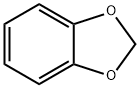
1,3-Benzodioxole, widely found in plant products, has shown potent antioxidant and antibacterial activities. It has recently been reported that 1,3-benzodioxole derivatives possess cytotoxic activity against several human tumor cell lines, including human colon carcinoma cells and multidrug-resistant nasopharyngeal carcinoma cells. No cytotoxic effects were noticed at a concentration of 10-4 M.
clear colourless to light yellow liquid. Insoluble in acids.
1,3-Benzodioxole is useful in gemological stimulant detection. It is also used as a precursor for perfumes, photo initiators, agrochemicals and pharmaceuticals. 1,3-benzodimine is an intermediate for the synthesis of the drugs oxolinic acid, cinoxacin and miloxacin.
1,3-Benzodioxole is synthesized through the reaction of catechol with dihalomethanes, typically employing a concentrated aqueous alkaline solution in the presence of tetraalkylammonium or phosphonium salts, sometimes in the presence of alkyl iodides. 1,3-Benzodioxole is an important intermediate in organic synthesis, especially for the preparation of alkaloids.
1,3-Benzodioxole belong to methylenedioxyphenyl (MDP) compounds that regulate cytochrome P 450-dependent drug oxidation, which is important in the process of eliminating drugs from the body. a hydrogen abstraction process can take place from the methylene-bridgea carbon of the benzodioxole compound and form a methylenedioxybenzene radical. It is therefore highly likely that 1,3-benzodioxole could serve as hydrogen donor for a CQ-based system initiating the photopolymerization of dental composite resin. In addition, 1,3-benzodioxole is an important organic intermediate (building block) to synthetize substituted methylenedioxybenzene products.
ChEBI: 1,3-benzodioxole is a benzodioxole consisting of a benzene ring substituted by a the methylenedioxy group.
Supersonic jet fluorescence spectra of 1,3-benzodioxole has been studied. The far-infrared spectrum of the vapour of 1,3-benzodioxole has been reported. The electronic absorption spectra and the laser-induced fluorescence spectra of supersonic-jet-cooled 1,3-benzodioxole molecules has been investigated.