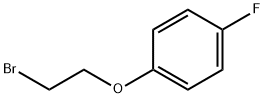
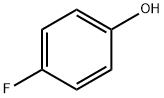
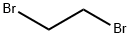
Step 2: 22.5% aqueous sodium hydroxide solution (55 mL) was slowly added to a mixed reaction flask containing 1,2-dibromoethane (112 g, 0.60 mol) and 4-fluorophenol (16.8 g, 0.15 mol). The reaction mixture was heated and stirred under reflux conditions for 5 hours. Subsequently, sodium hydroxide (3.0 g, 75 mmol) was added to the reaction system and heating and stirring were continued under reflux conditions for 5 hours. After completion of the reaction, the reaction solution was cooled to room temperature and extracted three times with dichloromethane (100 mL). The organic layers were combined, dried with anhydrous sodium sulfate and the solvent was removed by distillation under reduced pressure. The resulting crude product was purified by silica gel column chromatography (eluent: petroleum ether/ethyl acetate=10:1, v/v) to afford 1-(2-bromoethoxy)-4-fluorobenzene (compound-03) (29.7 g, 0.136 mol, 90% yield).
[1] Patent: EP2357165, 2011, A1. Location in patent: Page/Page column 18
[2] Bioorganic and Medicinal Chemistry Letters, 2001, vol. 11, # 4, p. 495 - 500
[3] Russian Journal of Organic Chemistry, 2000, vol. 36, # 2, p. 254 - 257
[4] Archiv der Pharmazie, 2013, vol. 346, # 3, p. 180 - 188
[5] European Journal of Medicinal Chemistry, 1992, vol. 27, # 5, p. 545 - 549