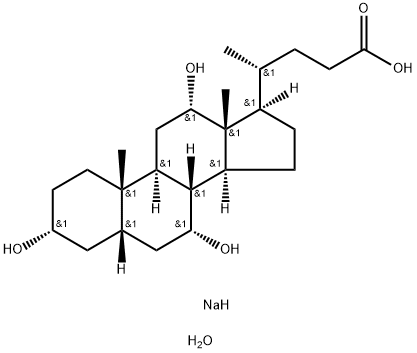
Biochemical solubilizing agent Sodium cholate hydrate is a non-denaturing detergent used for the extraction of membrane proteins. It is involved in the study to assess infiltration of pressurized promoter solutions in a mesoporous silica. Further, it serves as a biochemical solubilizing agent.
Non-denaturing detergent used for extraction of membrane proteins.
Cholate is a bile acid produced in liver during cholesterol breakdown. Cholate downregulates cholesterol-7-α-hydroxylase (rate-limiting step in bile acid synthesis). Cholate, an anionic detergent, is used alone and in combination with urea to extract and reconstitute membrane proteins and protein complexes.
Sodium cholate hydrate is a non-denaturing, anionic detergent.
Reduction in 12-α hydroxylase activity leads to low levels of cholic acid in liver disease.
Cholic acid (1% (w/w) Cholic acid-supplemented diet; p.o.; 14 days) decreases SHP (small heterodimer partner) protein expression, potentially via the upregulation of miR142-3p. Cholic acid increases CYP2D6 expression and activity[2].
| Animal Model: | Tg-CYP2D6 adult male mice (8 weeks of age and weighing 20–25 g)[2] |
| Dosage: | 1% (w/w) Cholic acid-supplemented diet |
| Administration: | Oral, 14 days |
| Result: | Decreases SHP expression and increased CYP2D6 activity. |
Human Endogenous Metabolite