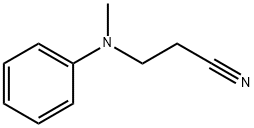
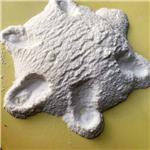
N-(2-Cyanoethyl)-N-methylaniline is used as an intermediate for dyes and organic pigments, and can be used as an intermediate for dyes such as Acid Red 14 and Basic Orange 24.
An activated carbon-supported platinum catalyst (Pt / C, 0.06 mg platinum, 0.0003 mmol, 0.1 mol percent) was added to a 10 mL Schlenk tube; after the evacuation of argon, add 1 mL of solvent (toluene). Under argon protection, to the above system, Were successively added phenylsilane (78.9 mg, 0.75 mmol), 3-Anilinopropionitrile (43.9 mg, 0.3 mmol) and formic acid (27.6 mg, 0.6 mmol). The whole anti-reaction was carried out at 80 ° C with stirring for 15 hours. After completion of the reaction, 3 mL of ethyl acetate was added to the system. The reaction was quenched with aqueous sodium hydroxide (3 mol / L, 3 mL). Ethyl acetate (3 x 10 mL), the organic phase was separated, Dried over anhydrous Na2SO4, and filtered; the solvent was removed by rotary evaporation. The residue was purified by column chromatography on ethyl acetate/petroleum ether = 1: 50 mixed solvent. Separation and purification gave N-(2-Cyanoethyl)-N-methyl aniline 226.4 mg, yield of 55 per cent.
[1] Journal of Organic Chemistry, 2015, vol. 80, # 20, p. 10375 - 10379
[2] Tetrahedron, 2013, vol. 69, # 6, p. 1712 - 1716
[3] Green Chemistry, 2010, vol. 12, # 5, p. 786 - 789
[4] Synthesis, 2008, # 24, p. 3931 - 3936
[5] Journal of the American Chemical Society, 1944, vol. 66, p. 725,728