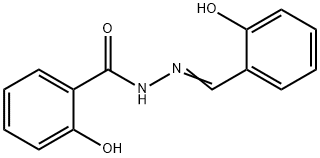
SCS (Salicylidene salicylhydrazide; 500-1000 mg/kg, i.p. or 800-1000 mg/kg, oral) produces abdominal constrictions in mice[2].
SCS (10-75 mg/kg; i.p.; once) shows antinociceptive activity against tonic, phasic and Capsaicin (HY-10448) nociception in mice[2].
SCS (10-75 mg/kg; i.p.; once) shows anti-inflammatory activity in mice[2].
SCS (50 and 75 mg/kg; i.p.; once) shows antinociceptive activity against neuropathic nociception[2].
| Animal Model: | BALB/c mice; tonic, phasic and Capsaicin (HY-10448) nociception model[2] |
| Dosage: | 10, 25, 50, and 75 mg/kg |
| Administration: | IP, single dose |
| Result: | Produced a significant protection on tonic, phasic and capsaicin nociception in a dose-dependent manner. |
| Animal Model: | BALB/c mice, Oxaliplatin (HY-17371)-induced neuropathic nociception model[2] |
| Dosage: | 50 and 75 mg/kg |
| Administration: | IP, single dose |
| Result: | Significantly attenuated the paw withdrawal threshold changes associated with Oxaliplatin. Significantly increased the percent antinociception during 30-120 min.
|