Once vitamin D, enters the circulation, it is transported to the liver where it is hydroxylated to 25-hydroxyvitamin D3 (25-(OH)D3). 25-Hydroxyvitamin D3 is the major circulating form of vitamin D3 and its determination is often used to measure the vitamin D status of a patient. Although 1 ,25-(OH)2D3 has a marked effect on inhibiting proliferation of cultured human fibroblasts and keratinocytes and inducing terminal differentiation of cultured keratinocytes, there is no evidence that a deficiency in this hormone will increase proliferative activity in human skin. Thus, it would appear that 1,25-(OH)D3 is not a major regulator of dermal and epidermal proliferation and differentiation. Despite the fact that 1,25-(OH)2D3 is not a major participant in the regulation of epidermal differentiation, the observations that 1,25-(OH)D3 can inhibit the hyperproliferative activity of epidermal cells in patients with psoriasis is intriguing. It should be noted that patients with psoriasis have a normal metabolism of vitamin D to 25-hydroxyvitamin D and 1 ,25-(OH)2D3.24 Therefore, 1 ,25-(OH)2D3 and its analogs hold promise as unique pharmacologic agents for treating hyperproliFerative disorders of the skin such as psoriasis.
Derived from cholesterol, vitamin D is biosynthesized from its prohormone cholecalciferol (D3), the product of
solar ultraviolet irradiation of 7-dehydrocholesterol in the skin.
In 1966, it was first recognized that vitamin
D must undergo activation via two oxidative metabolic steps. The first oxidation to
25-hydroxycholecalciferol (25(OH)D3: calcifediol; Calderol) occurs in the endoplasmic reticulum of the liver and
is catalyzed by vitamin D 25-hydroxylase. This activation step is not
regulated by plasma calcium concentrations. The major circulating form (10–80 μg/mL) is 25(OH)D3, which also
is the primary storage form of vitamin D.
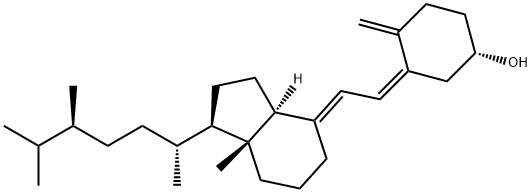
Vitamin D4 is the active analogue of Vitamin D.
ChEBI: Vitamin D4 is it is present in mushrooms. It has a role as a fungal metabolite. It is a vitamin D and a seco-ergostane.
Sterol-specific cytoplasmic receptor proteins (vitamin D receptor) mediate the biological action of vitamin D.
The active hormone is transported from the cytoplasm to the nucleus via the vitamin D receptor, and as a result
of the interaction of the hormone with target genes, a variety of proteins are produced that stimulate the
transport of calcium in each of the target tissues
Active vitamin D works in concert with PTH to enhance active
intestinal absorption of calcium, to stimulate bone resorption, and to prohibit renal excretion of calcium. If
serum calcium or 1,25-calcitriol concentrations are elevated, then vitamin D 24-hydroxylase (in renal
mitochondria) is activated to oxidize 25(OH)D3 to inactive 24,25-dihydroxy-cholecalciferol and to further oxidize
active vitamin D to the inactive 1,24,25-trihydroxylated derivative. Both the 1,24,25-trihydroxylated and the
24,25-dihydroxylated products have been found to suppress PT H secretion as well. The biosynthesis of vitamin D is tightly regulated based on the serum concentrations of calcium, phosphate, PTH, and active vitamin D.
Vitamin D is a 9,10-secosteroid and 6 forms have been identified. The importance of vitamin D in bone (calcium homeostasis) is well established, and vitamin D has been the subject of increased attention in recent years for its role in muscle function, immunology, heart and cardiovascular disease, cancer, and insulin secretion. The vitamin D4 precursor 22,23-dihydroergosterol was present in all mushroom composites. The levels were not correlated with vitamin D4, but differed among species. Enoki mushrooms had a notably higher 22,23-dihydroergosterol content, with an average of 16.5 mg/100g compared to 4.49–8.89 mg/ 100 g in other types of mushrooms.