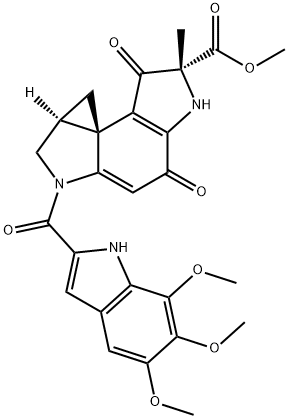
Duocarmycin A, which is one of well-known antitumor antibiotics, is a DNA alkylator and efficiently alkylates adenine N3 at the 3′ end of AT-rich sequences in the DNA. Duocarmycin A, as a chemotherapeutic agent, results HLC-2 cells typically apoptotic changes, including chromatin condensation, sub-G1 accumulation in DNA histogram pattern, and decrease in procaspase-3 and 9 levels[1].