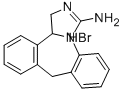
Clinical studies have shown that, at the same dosage, epinastine hydrochloride is significantly more effective than other second-generation histamine H1 receptor antagonists such as terfenadine, astamiva, and ketotifen, and also has a lower incidence of central sedation and cardiotoxicity. Therefore, the market demand for epinastine hydrochloride is substantial, making its synthesis necessary. Literature searches reveal that publicly available patents and literature use 6-aminomethyl-6,11-dihydro-5H-dibenzo[b,e]azapyridine (Ⅳ) as a key intermediate in epinastine synthesis, which is cyclized with cyanogen bromide to yield epinastine. Epinastine hydrobromide is also a synthetic intermediate for epinastine.