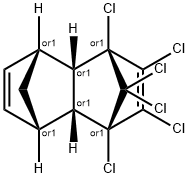
Isodrin is commercially produced through a Diels–Alder reaction between hexachlorocyclopentadiene and cis-butene, followed by chlorination to form the final polycyclic structure. The synthesis begins with the formation of the dicyclopentadiene adduct, which undergoes further chlorination using elemental chlorine in the presence of a catalyst such as iron or UV light. This step introduces additional chlorine atoms, stabilising the molecule and enhancing its insecticidal properties.
Solid. ISODRIN is no longer used as a pesticide. Isomer of aldrin.
ISODRIN is related to aldrin. (nonspecific -- Aldrin) When heated to decomposition ISODRIN emits toxic fumes of chlorine. Unstable, reactions induced by light or acid. [EPA, 1998].
Toxic, use may be restricted.
ISODRIN is classified as extremely toxic. Probable oral lethal dose for humans is 5-50 mg/kg or between 7 drops and 1 teaspoonful for a 70 kg (150 lb.) person. It causes renal damage and hyperactivity of sympathetic nervous system.
(Non-Specific -- Aldrin) ISODRIN may burn but may not ignite readily. Container may explode in heat of fire. Fire and runoff from fire control water may produce irritating or poisonous gases. Material is related to aldrin. (Non-Specific -- Aldrin) When heated to decomposition ISODRIN emits toxic fumes of chlorine. Unstable, reactions induced by light or acid.
Central nervous system stimulant. GABA-gated chloride channel antagonist. Also stomach and contact toxin