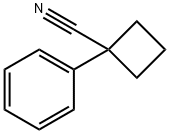
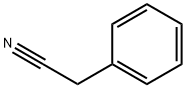
The general procedure for the synthesis of 1-phenylcyclobutanecarbonitrile from phenylacetonitrile and 1,3-dibromopropane was as follows: powdered potassium hydroxide (536 g, 9.56 mol, 5.6 eq.) was suspended in a solvent mixture of toluene (1.54 L) and water (154 mL) and heated to 45 °C. Subsequently, tetrabutylammonium bromide (28 g, 0.85 mol, 0.05 eq.) and 1,3-dibromopropane (379 g, 1.88 mol, 1.1 eq.) were added followed by the slow dropwise addition of a toluene (500 mL) solution of phenylacetonitrile (200 g, 1.7 mol, 1.0 eq.) over a period of 42 min. During the dropwise addition, the reaction temperature was raised to 95 °C and the mixture was heated to reflux after the dropwise addition was completed. The resulting pink slurry was stirred at reflux temperature for 1 h. The completion of the reaction was confirmed by HPLC analysis. The reaction mixture was cooled to 20-25 °C and filtered through a Celite pad. The solid residue was washed with toluene (1.0 L), and the combined filtrates were washed sequentially with water (2 × 300 mL) and brine (150 mL), dried over anhydrous magnesium sulfate and filtered, and concentrated to give the crude product 1-phenylcyclobutanecarbonitrile (263 g) as an orange oil. The crude product was purified by vacuum distillation (boiling point 105 °C/750 mT) to give 1-phenylcyclobutanecarbonitrile in colorless liquid form [140 g, yield 52%, purity 97.7% (AUC)]. The major impurity was identified as B2 (2.3% AUC) (see Example 9, Synthesis of B section for details).