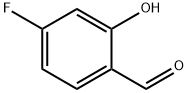
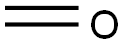
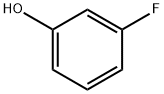
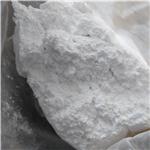
The general procedure for the synthesis of 4-fluoro-2-hydroxybenzaldehyde from formaldehyde and 3-fluorophenol was as follows: to a mixture containing 3-fluorophenol (5 mL, 55.3 mmol) and anhydrous acetonitrile (250 mL) were added MgCl2 (14.2 g, 149 mmol), anhydrous trimethylamine (27 mL) and paraformaldehyde (11 g). The reaction mixture was stirred under reflux conditions for 5 h and subsequently cooled to room temperature. The reaction was quenched by addition of 5% hydrochloric acid (250 mL) and extracted with ethyl acetate (100 mL × 3). The combined organic layers were washed sequentially with 5% hydrochloric acid, water and brine, dried over anhydrous sodium sulfate and concentrated under reduced pressure. The crude product was purified by silica gel column chromatography (eluent: petroleum ether/ethyl acetate = 50:1 to 20:1) to afford 4-fluoro-2-hydroxybenzaldehyde (5 g, 65% yield) as a light yellow solid.1H NMR (400 MHz, CDCl3) data were as follows: δ 11.37 (d, J = 1.6 Hz, 1H), 9.83 (s, 1H), 7.55- 7.59 (m, 1H), 6.65-6.75 (m, 2H).