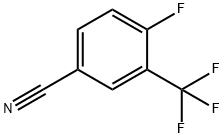
10 mmol of 3-trifluoromethyl-4-haloaniline was dissolved in 10 mL of slightly heated glacial acetic acid. 2.5 mL of 12 mol·L⁻¹ sulfuric acid solution was slowly added and stirred until a dark yellow solution was formed. The solution was then cooled to 0–5 °C in an ice-salt bath and stirred until a white paste was formed. 10 mL of 2 mol·L⁻¹ NaNO₂ solution, cooled to 0–5 °C, was then added dropwise to the white paste under vigorous stirring (approximately 30 min) to form a reddish-brown diazonium salt solution. The solution was continued until the solution turned blue on starch-potassium iodide test paper. Finally, the glacial acetic acid was neutralized with Na₂CO₃ to pH = 7.0.
Without separation and precipitation, it was directly used for the synthesis of the target compound. 0.84 g (2 mmol) of K3[Fe(CN)6] was dissolved in 20 mL of distilled water. 4.5 mmol of ethylenediamine and 1.5 mmol of Cu(OAc)2 were added, and the mixture was stirred at room temperature for 1 h. Then, it was cooled to 0-5 °C in an ice-salt bath. The above diazonium salt solution was added dropwise to the K3[Fe(CN)6] solution (approximately 1 h), and stirred continuously for 2 h under ice-salt bath cooling, resulting in a reddish-brown precipitate. The precipitate was filtered off, the solid was washed with dichloromethane, and the organic phase was collected. The aqueous phase was extracted twice with 1/3 volume of dichloromethane, and the organic phases were collected. The two organic phases were combined, concentrated under reduced pressure, and then loaded onto a column for elution (petroleum ether:ethyl acetate = 20:1) to obtain the product.