Lithium methoxide (3 cm3, 3mmol of 1.0M solution in methanol) was added to (11) (1.0 g, 2.8 mmol) in methanol (15 cm3) at 0 °C, with stirring, under an atmosphere of nitrogen. The mixture was stirred at room temperature for 67 h, then water (20 cm3) was added and the mixture extracted into dichloromethane (DCM). The DCM solution was dried (MgS04) and evaporated giving a solid ( 1.1 g) shown to consist of 4- methoxy-3,5-difluoro-2,6-dibromopyridine (22g) ( 19% ), 2,6-dibromo-4,5-dimethoxy-3- fluoropyridine (22h) (5%), (23b) (39% by comparison with authentic sample) and (23a) (36%). Neither column chromatography (eluting DCM and petrol 7: 3) nor preparative scale GLC ( 10% SE30, 140 oC) gave adequate separation of the products. However, a carbon nmr spectrum and GCMS of a mixture of (22g) and (23b) was obtained and the carbon spectra was assigned by comparison with that of (23b ).
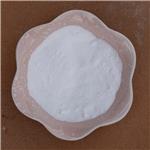
Lithium Methoxide [865-34-9], LiOCH3, Mr 37.98, is a white solid that is soluble in methanol but virtually insoluble in aprotic organic solvents. It is commercially available as a 99 % fine crystalline solid and as 10 % solution in methanol. It can be used as base, especially as catalyst for transesterification reactions.
Lithium methoxide is used in sol-gel synthesis of lithium borophosphates. It is also useful for deprotonation reactions in organic synthesis. Further, it serves as a mild base in organic synthesis especially in transesterifications.
Employed in sol-gel synthesis of lithium borophosphates.
LITHIUM METHOXIDE (CH3OLi) is a key intermediate product generated by the decomposition of the lithium-ion battery electrolyte during cycling. During the battery's operational lifespan, the electrolyte undergoes continuous side reactions, yielding intermediate products such as methanol, ethanol, hydrogen fluoride (HF), carbon monoxide (CO) and, notably, CH3OLi. As a highly polar intermediate, CH3OLi acts as a key catalyst in subsequent chain reactions, accelerating the generation of harmful gases such as H2, CO and CH4 [2].
As a constituent of the solid electrolyte interphase (SEI), the solubility of lithium methoxide influences the stability of the SEI layer and the battery's cycling performance. The solubility of LiOCH3 is 0.05 g·L⁻¹ in propylene (PC), 0.64 g·L⁻¹ in ethylene (EC, 40°C), 0.09 g·L⁻¹ in dimethyl (DMC), and 0.01 g·L⁻¹ in EC/PC/3DMC [1].
The most probable impurity is LiOH due to hydrolysis by moisture. It is important to keep the sample dry. It can be dried by keeping in a vacuum at 60-80o under dry N2 using an oil pump for a few hours. Store it under N2 in the cold. It should not have bands above 3000cm-1, IR has � 1078, 2790, 2840 and 2930cm-1 in KBr. [Suebold J Org Chem 21 1561956, Beilstein 1 IV 1220, 1241.]
[1] Jennifer Jones . (2011). Solubilization of SEI lithium salts in alkylcarbonate solvents. Fluid Phase Equilibria, 305 2, Pages 121-126. https://doi.org/
10.1016/j.fluid.2011.03.007[2] Zhefu Mu. (2026). Tracking Byproducts Lithium Methoxide in Li-Ion Batteries via Interface-Stabilized Perovskite Quantum Dots-Based Sensors. ACS Sensors. https://doi.org/
10.1021/acssensors.6c00534