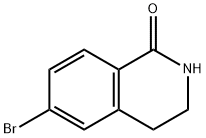
6-bromo-3,4-dihydroisoquinolin-1(2H)-one is an intermediate used in the synthesis of benzolactams as dopamine D3 receptor ligands.IT is also used in the synthesis of new, selective 3-aminopyrazole based MK2-inhibitors that was proved to inhibit intracellular phosphorylation of hsp27 as well as LPS-induced TNFα release in cells.
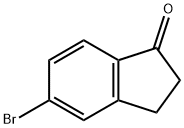
1. 5-bromo-1-indanone (8a) (1.08 g, 5.1 mmol) was weighed into a 100 mL round bottom flask.
2. dichloromethane (30 mL), methanesulfonic acid (15 mL) and sodium azide (0.5 g, 7.7 mmol) were added sequentially to the reaction flask at 0°C. The reaction was carried out at room temperature.
3. The reaction mixture was stirred at room temperature for 3 hours.
4. Upon completion of the reaction, 1.0 M aqueous sodium hydroxide (50 mL) was slowly added to the reaction solution to quench the reaction.
5. The aqueous phase was extracted with dichloromethane (100 mL x 1) and the organic phases were combined.
6. The organic phase was washed with saturated brine (40 mL×1), dried over anhydrous sodium sulfate and filtered.
7. The filtrate was concentrated under reduced pressure and purified by silica gel column chromatography (eluent: petroleum ether/ethyl acetate, v/v=3:1) to afford 6-bromo-3,4-dihydro-2H-isoquinolin-1-one (8b) as a gray solid (0.45 g, 39% yield).
[1] Patent: US2010/4231, 2010, A1. Location in patent: Page/Page column 67-68
[2] Bioorganic and Medicinal Chemistry Letters, 2011, vol. 21, # 9, p. 2670 - 2674
[3] Patent: US2016/251376, 2016, A1. Location in patent: Paragraph 0852; 0853; 0854
[4] Patent: EP3239143, 2017, A2. Location in patent: Paragraph 0088
[5] Patent: CN107879975, 2018, A. Location in patent: Paragraph 0132; 0134