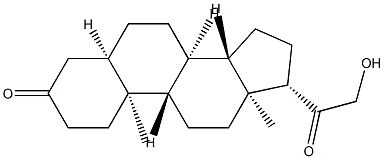
Hydroxydione increases the duration of hexobarbital narcosis and repeats hexobarbital doses decrease the duration of hydroxydione narcosis[1].
Hydroxydione (5-100 mg/kg; i.v. once) produces a transient hypotension with little bradycardia and affects the respiration[2].
| Animal Model: | Cats with chloralose 60 to 80 mg/kg[2] |
| Dosage: | 5-100 mg/kg |
| Administration: | Intravenous injection; 5-100 mg/kg once |
| Result: | Produce severe respiratory depression, but showed no effect on the tibialis in response to excitation of its motor nerve under the condition of chloralose. Produced the usual substantial sustained hypotension seen in chloralosed cats to response the nictitating membrane to
preganglionic excitation with a dose of 10 mg/kg. Repressed the respiration in chloralosed cats after a rapid injection.
|