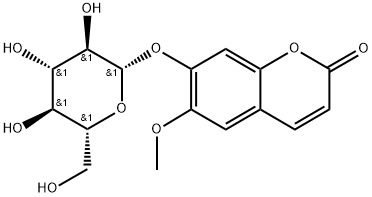
Soluble in methanol, ethanol, DMSO and other organic solvents, derived from diclofenac, dingongteng, scopolamine root, ningxia wolfberry, mulberry tree.
Scopoletin 7-O-glucoside is a derivative of Scopoletin (S200500), a common constituent found in a variety of plants that has potential to regulate hyperthyroidism in rats. Scopoletin 7-O-glucoside is a compound that is obtained from the methanolic extract of the fresh underground parts of the flower Scopolia japonica.
ChEBI: A member of the class of coumarins that is scopoletin attached to a beta-D-glucopyranosyl residue at position 7 via a glycosidic linkage.
Scopolin (0.02% (w/w) in HFD diet, 8 weeks) decreases the body weight gain, and alleviates hepatic steatosis in HFD-fed mice[2].
Scopolin (2 μmol, icv) increases the extracellular acetylcholine concentration in rat brain to about 300% compared to basal release[3].
Scopolin (50, 100 mg/kg, i.p.) inhibits adjuvant-induced arthritis by inhibiting inflammation and angiogenesis in rats[4].
| Animal Model: | HFD-fed C57BL/6N mice[2] |
| Dosage: | 0.02% (w/w) in HFD diet (equivalent to 20mg/kg body weight) |
| Administration: | Supplemented in diet, 8 weeks |
| Result: | Reversed the HFD-induced hepatic TG, cholesterol, and fatty acid accumulation by 35%, 49%, and 35%, respectively.
Reversed the HFD-induced decrease in plasma adiponectin levels by 76%, and reduced the increased plasma MCP-1, TNFα, and IL-6 levels.
Restored HFD-induced downregulation of SIRT1 activity. |
| Animal Model: | Adjuvant-induced arthritis (AIA) rats[4] |
| Dosage: | 50, 100 mg/kg |
| Administration: | i.p. |
| Result: | Inhibited inoculated and non-inoculated paw swelling and articular index scores.
Reduced new blood vessels, and reduced IL-6, VEGF and FGF-2 expressions in rat synovial tissues. |
VEGFR | IL Receptor | AChR | Antifection