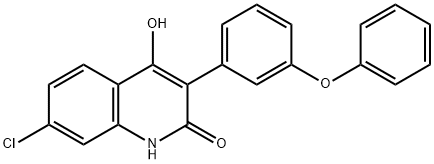
L-701324 (5-10 mg/kg; i.p.; once) exhibits antidepressant-like potential in the forced swim test (FST) and tail suspension test (TST) without affecting the locomotor activity of mice[1].
L-701324 (5-10 mg/kg; i.p.; daily, for 2 weeks) produces strong antidepressant-like effects in the chronic unpredictable mild stress (CUMS) model of depression and prevents the CUMS-induced decreases in eurogenesis and the BDNF signaling cascade in the hippocampus[1].
L-701324 (2.5-5 mg/kg; p.o.; once) inhibits NMDA receptor activity via a blockade of the NMDA/glycine-sensitive site at the NMDA receptor is accompanied by a reduction of anxiety-like behavior in both non-conditioned and conditioned conflict behavior situations[2].
| Animal Model: | Male C57BL/6 J mice in the chronic unpredictable mild stress (CUMS) (7 weeks of age) [1] |
| Dosage: | 5 and 10 mg/kg |
| Administration: | Intraperitoneal injection; daily, for 2 weeks |
| Result: | Reduced the immobility of C57BL/6 J mice.
Increased the expression of BDNF, pTrkB and pCREB in the hippocampus.
|
| Animal Model: | Male C57BL/6 J mice in the forced swim test (FST) and tail suspension test (TST) (7 weeks of age)[1] |
| Dosage: | 5 and 10 mg/kg |
| Administration: | Intraperitoneal injection; once |
| Result: | Reduced the immobility of C57BL/6 J mice in the FST and TST.
|
| Animal Model: | Male Sprague-Dawley rats (280-300 g)[2] |
| Dosage: | 2.5 and 5 mg/kg |
| Administration: | Oral administration; once |
| Result: | Increased in the percentage of time spent in the open arm in a dose-dependent.
Increased punished responding in the Vogel's conflict test in a dose-dependent fashion.
|