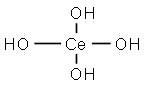
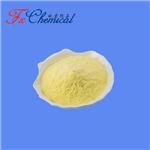
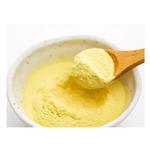
Cerium tetrahydroxide, also known as cerium(IV) hydroxide, is a pale yellow or brownish-yellow powder that is insoluble in water and weak acids but soluble in concentrated acids, forming the corresponding salts. It absorbs CO₂ from the air to form cerium carbonate. It is used to produce cerium salts and as an opacifier to impart a yellow color to glasses and enamels [HAW93].

Cerium hydroxide exists in two stable forms, namely cerium(III) hydroxide (Ce(OH)₃) and cerium(IV) hydroxide (Ce(OH)₄), which can be interconverted through changes in oxidation state. Cerium(III) hydroxide is a weak base; it is readily soluble in strong acids, forming cerium(III) salts, but insoluble in strong bases. Cerium(IV) hydroxide is amphoteric, with predominantly acidic character; it is soluble in both strong acids, forming cerium(IV) salts, and strong bases, forming cerates.
Cerium Hydroxide, also called Cerium Hydrate, is the important raw material for FCC catalyst, auto catalyst, polishing powder, special glass, and water treatment. Cerium is added to the dominant catalyst for the production of styrene from methylbenzene to improve styrene formation. It is used in FCC catalysts containing zeolites to provide both catalytic reactivity in the reactor and thermal stability in the regenerator.
Cerium (IV) hydroxide was prepared by the precipitation of cerium (IV) from an aqueous solution of armonium hexenitratocerate (IV) with aqueous ammonia.
reagent type: catalyst
core: cerium