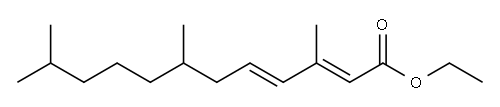
Hydroprene is an amenity and domestic insecticide. It has a low aqueous solubility, is quite volatile and, based on its chemical properties, it is slightly mobile but unlikely to leach to groundwater. It is not generally persistent in soil systems. It has a low mammalian toxicity. It shows a moderate level of toxicity to fish and daphnia but is relatively non-toxic to adult honeybees but may be harmful to bee larvae.
Hydroprene is used in the method for controlling pests of sugarcane, citrus, rapeseed, and potato plants.
ChEBI: The ethyl ester of (2E,4E)-3,7,11-trimethyldodeca-2,4-dienoic acid
Hydroprene is commercially synthesised through esterification of 3,7,11-trimethyl-2,4-dodecadienoic acid with ethanol. The production process begins with the preparation of the dodecadienoic acid backbone, which involves controlled oligomerization and selective methylation of linear precursors. This intermediate is then esterified with ethanol under acidic conditions to yield hydroprene. The final product is purified via distillation and stabilised for formulation
A juvenile hormone mimic. Contact and stomach action, acts by duplicating the action of juvenile hormones keeping the insect in an immature state
Insecticide; Insect Growth Regulator