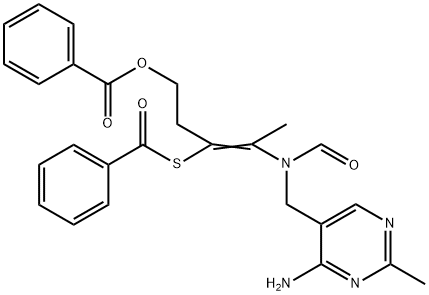
A chronic toxicity study in male Wistar rats for 6 months at dietary levels of up to 1000 ppm, shows Dibenzoyl Thiamine to be without specific toxic effects. A teratogenicity study in rats show Dibenzoyl Thiamine to be without embryotoxic or teratogenic effects. Tests for mutagenicity in bacterial systems, in the dominant lethal assay and in an in vivo cytogenetics test show Dibenzoyl Thiamine to be without mutagenic. Dibenzoyl Thiamine is metabolised to Vitamin Br and benzoic acid, and the benzoic acid moiety is almost quantitatively excreted in the urine, as hippuric acid[1].