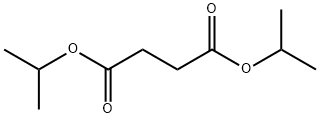
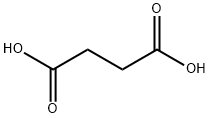
In a typical reaction, butanedioic acid (1 mol), isopropanol (1.5-2 mol) and AMA 2:3 (332 g, 0.6 mol) were mixed in a reaction glass tube equipped with a screw cap and a magnetic stirrer until a homogeneous wet mixture was formed. The reaction mixture was placed in a microwave reactor (Anton Parr Monowave 300) and irradiated at 80 °C for 8 min or at 120 °C for 20 min. Upon completion of the reaction, the mixture was cooled, diluted with dichloromethane (41 mL), filtered by gravity and the filtrate was washed with dichloromethane. Subsequently, the filtrate was washed sequentially with saturated sodium carbonate solution (Na2CO3) and water. The organic layer was separated, dried with anhydrous sodium sulfate (Na2SO4), filtered and concentrated under reduced pressure to give diisopropyl succinate.
[1] Synthetic Communications, 2014, vol. 44, # 16, p. 2386 - 2392
[2] Phosphorus, Sulfur and Silicon and the Related Elements, 2004, vol. 179, # 6, p. 1187 - 1191
[3] Journal of Organic Chemistry, 1983, vol. 48, # 18, p. 3106 - 3108
[4] Journal of the Chemical Society, 1948, p. 631