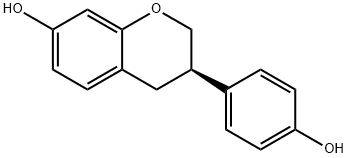
Animals fed (R)-Equol have a significantly reduced number of palpable tumors over time when compare with Controls (P=0.002). Furthermore, the number of palpable tumors formed per rat in the (R)-Equol-fed group is significantly lower than that of rats treated with S-(-)equol (P=0.008). (R)-Equol-fed animals have 43% fewer tumors than the control group and this difference is highly statistically significant (P=0.004). The number of tumors/tumor-bearing animal is significantly lower in the animals fed (R)-Equol compare with Controls (3.3±0.4 versus 5.5±0.5, P=0.004). At necropsy, the mean (±SEM) tumor weight per animal for (R)-Equol fed rats (5.3±1.1 mg) is significantly reduced (P=0.04) when compare with Controls (9.9±1.4 mg). Feeding the (R)-Equol diet results in significantly increased tumor latency (P=0.003)[3].