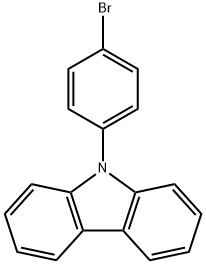
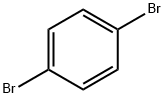
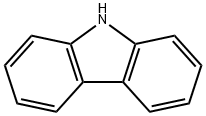
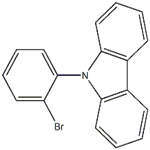
Step 2: Synthesis of 4-(carbazol-9-yl)diphenylamine (abbreviation: YGA); In Step 2, YGA was synthesized according to (i) and (ii) shown below. (i) Synthesis of 9-(4-bromophenyl)carbazole; First, 56 g (240 mmol) of 1,4-dibromobenzene, 31 g (180 mmol) of carbazole, 4.6 g (24 mmol) of copper iodide, 16 g (480 mmol) of potassium carbonate and 2.1 g (8 mmol) of 18-crown-6-ether were added to a 300 mL three-necked flask and air displaced with nitrogen. 66 g (480 mmol) of potassium carbonate and 2.1 g (8 mmol) of 18-crown-6-ether were added to a 300 mL three-necked flask and the air in the flask was replaced with nitrogen. Subsequently, 8 mL of N,N-dimethylpropyleneurea (abbreviation: DMPU) was added to the flask and the reaction mixture was stirred at 180 °C for 6 hours. After completion of the reaction, the mixture was cooled to room temperature and the precipitate was removed by filtration. The filtrate was washed sequentially with dilute hydrochloric acid, saturated aqueous sodium bicarbonate solution and saturated aqueous sodium chloride solution, and then dried with anhydrous magnesium sulfate. After drying, the solution was naturally filtered and concentrated, and the resulting oil was purified by silica gel column chromatography (eluent: hexane/ethyl acetate = 9:1) and finally recrystallized with chloroform and hexane. Finally, 21 g of light brown plate-like crystals of the target product 9-(4-bromophenyl)carbazole were obtained in 35% yield.