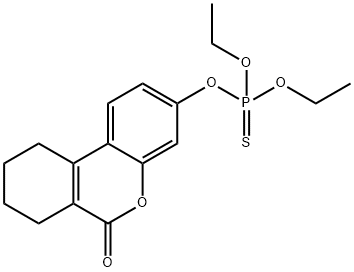
Coumithoate is an obsolete organophosphate insecticide. The substance has not been extensively studied and so little information is known regarding its environmental fate, ecotoxicity or impact on human health.
Coumithoate was manufactured using the same multipurpose plant chemistry applied to other thio phosphate esters. Commercial production began with preparation of the O alkyl phosphorochloridothioate intermediate, typically generated by reacting phosphorus oxychloride or phosphorus thiochloride with the required alcohol under strictly anhydrous, acid scavenged conditions. In a separate step, the N methylcarbamate derived heterocycle (the coumarin based moiety characteristic of coumithoate) was synthesised and purified. The two components were then coupled in a controlled esterification step, usually in aromatic or chlorinated solvents, with careful temperature management to control hydrogen chloride evolution. After reaction completion, the crude mixture underwent aqueous neutralisation, phase separation, solvent exchange, and vacuum stripping, yielding technical grade coumithoate.