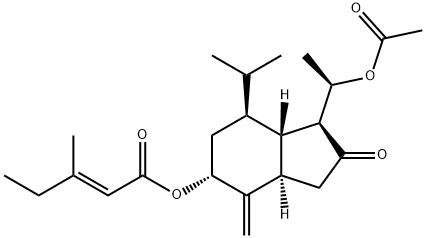
White crystalline powder, soluble in ether, chloroform, ethyl acetate, methanol, insoluble in water, derived from the flower bud of Asteraceae Tussilago farfara, Senecio kleinia Less root.
Tussilagone, a major active component in Tussilago farfara, has anti-inflammatory effect. Tussilagone ameliorates inflammatory responses in dextran sulphate sodium-induced murine colitis. Tussilagone inhibits the inflammatory response and improves survival in cecal ligation and puncture (CLP)-induced septic mice[1][2].
Tussilagone, the main active ingredient of Tussilago farfara, has anti-inflammatory properties. It ameliorates the inflammatory response of dextran sulfate sodium-induced colitis in mice.
Tussilagone administration (1 mg/kg and 10 mg/kg) produced decreased mortality and lung injury in CLP-activated septic mice. Augmented expression of cyclooxygenase (COX)-2 and TNF-α in pulmonary alveolar macrophages of septic mice were attenuated by tussilagone administration.
[1] Cheon HJ, et al. Tussilagone, a major active component in Tussilago farfara, ameliorates inflammatory responses in dextran sulphate sodium-induced murine colitis. Chem Biol Interact. 2018 Oct 1;294:74-80. DOI:
10.1016/j.cbi.2018.08.022[2] Kim YK, et al. Tussilagone Inhibits the Inflammatory Response and Improves Survival in CLP-Induced SepticMice. Int J Mol Sci. 2017 Dec 18;18(12). pii: E2744. DOI:
10.3390/ijms18122744