(1) Mix 1650.5g (10mol) of n-hexane bromide with 3053.5g (10mol) of n-hexadecane bromide to form a bromide mixture for later use; (2) Weigh 483g (21mol) of metallic sodium and cut it into small strips with an area of approximately 1×3cm2 for later use; (3) Add 50g of the bromide mixture and 20g of metallic sodium to the reaction vessel, stir and heat to 80℃, remove the heat source, rely on the reaction for heating, and maintain at 80℃. At 120℃, the remaining bromoalkane mixture was continuously added dropwise, along with the remaining metallic sodium, maintaining a slight reflux. After the addition was complete, the temperature was controlled at 160℃ and kept constant for 2 hours. (4) 400g of 95% ethanol and 1000ml of water were added sequentially. The organic matter was separated, washed with water until neutral, dried with anhydrous magnesium sulfate, and the fraction at 260-280℃ was collected by distillation. The fraction was washed with 600g of concentrated potassium sulfate until the acid layer was light yellow. The organic phase was washed with water until neutral, dried, and 500g of 96% n-dodecane and 600g of 98% n-Docosane were collected by fractionation column. The obtained n-alkane content reached 96%-98%. The molar ratio of bromohexane to bromohexadecane was 1:1. The reaction vessel was a three-necked flask consisting of a stirrer, a separatory funnel, and a reflux condenser. The strong oxidant was concentrated sulfuric acid or acidic potassium permanganate.
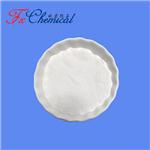
colourless crystalline solid
It is employed as a perfuming agent in cosmetics industry. It is also used in organic synthesis, calibration, and temperature sensing equipment. Docosane is used to investigate commercially available waxes in the form of thin disc samples as possible diffraction intensity standards for macromolecular crystallography synchrotron beamlines.
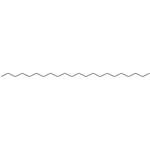
ChEBI: Docosane is a straight-chain alkane with 22 carbon atoms. It has a role as a plant metabolite.
Docosane (C22H46) is a long-chain alkane that can be used as an organic phase-change material for thermal energy storage. Pure docosane has a high latent heat of 256.1 J/g, but its thermal conductivity is relatively low, at only approximately 0.2–0.3 W/(m·K), which limits the rate of heat exchange during the thermal storage process. When combined with sponge-like graphene, both its latent heat (262.8 J/g or 262.2 J/g) and thermal conductivity (0.59 W/(m·K)) are enhanced. This composite material can be utilised in solar thermal energy storage systems as a phase-change thermal storage medium with high energy density and rapid thermal response[1].
Solid. Insoluble in water. Used in organic synthesis, calibration, and temperature sensing equipment.
Saturated aliphatic hydrocarbons, such as N-DOCOSANE, may be incompatible with strong oxidizing agents like nitric acid. Charring of the hydrocarbon may occur followed by ignition of unreacted hydrocarbon and other nearby combustibles. In other settings, aliphatic saturated hydrocarbons are mostly unreactive. They are not affected by aqueous solutions of acids, alkalis, most oxidizing agents, and most reducing agents. When heated sufficiently or when ignited in the presence of air, oxygen or strong oxidizing agents, they burn exothermically to produce carbon dioxide and water.
Crystallise docosane from EtOH or ether. [Beilstein 1 IV 572.]
[1] J.F. Li. (2014). Simultaneous enhancement of latent heat and thermal conductivity of docosane-based phase change material in the presence of spongy graphene. Solar Energy Materials and Solar Cells, 128, Pages 48-51. https://doi.org/
10.1016/j.solmat.2014.05.018