Step 1: Preparation of crude thalidomide
10 kg of N-phthalic acid glutamic anhydride was added to a reaction vessel and heated until melted. Ammonia gas was then introduced. After the reaction was completed, the reaction solution was placed in water while stirring. After cooling, the mixture was filtered, and the filter cake was washed with water to obtain 10 kg of crude thalidomide.
Step 2: Preparation of high-purity thalidomide
100 g of crude thalidomide (HPLC 97.3%) was added to 200 g of dimethyl sulfoxide and 1 g of activated carbon, heated to 100 °C to dissolve, and filtered while hot. The filtrate was cooled to 0 °C, filtered again, and the filter cake was washed with ethanol and dried at 80 °C to obtain 65 g of thalidomide.
Glutamic acid derivatives
Thalidomide is a kind of synthetic glutamic acid derivatives. At room temperature, it is a kind of white crystalline powder, and is odorless, tasteless, and slightly soluble in water, methanol, ethanol or acetone, highly soluble in dimethylformamide or pyridine, but insoluble in ether, chloroform or benzene.
At 1950s, Germany developed the drug mainly for treating epilepsy. However, due to the lack of efficacy, then it is further used as an adjunct for sleeping while also widely used as antiemetic drug for pregnant women during their pregnancy.
At early 1960s, thalidomide incident---there had been a lot of reports about birth defect caused by thalidomide (such as: short limb malformations, bone defect, ear missing, cleft lip, heart and gastrointestinal tract abnormalities, etc.). Thereby, it was further prohibited by many countries, and subjected to withdrawal from the pharmaceutical market; but scientists did not totally negate thalidomide and continued to carry out in-depth research; there has been much encouraging and promising progress on the pharmacologic mechanisms of immunity, anti-inflammatory, and anti-angiogenic as well as the clinical treatment of various kinds of difficult disease, making people gain new understanding of the functions of thalidomide.
Since the 1970s, with the emergence of the various research progresses of leprosy, rheumatism and various types of cancer, Israel dermatologists had applied thalidomide as a sedative for patients of erythema nodosum leprosy and obtain rapid alleviation of symptoms. After that many patients of erythema nodosum leprosy had received good therapeutic effects. In1998, the FDA approved thalidomide for the treatment of erythema nodosum leprosy.
In 2004, during the American Society of Hematology annual meeting, RaJkumar from the US Mayo Clinic reported the progress of two studies about using thalidomide and its analogs (lenalidomide) in first-line treatment of multiple myeloma. Both thalidomide and its analogs, lenalidomide are effective in the treatment of multiple myeloma with lenalidomide having a better effect than thalidomide.
In May 2006, the US FDA approved it for the treatment of multiple myeloma.
The above information is edited by the chemicalbook of Dai Xiongfeng.
Foreign scholars have reported that when using thalidomide for treatment of 7 rheumatoid patients who can’t be cured by various kinds of anti-inflammatory drugs and immune inhibition, the symptoms were alleviated in most cases within a few weeks at the dose in 400~600mg/d. All patients have their erythrocyte sedimentation rate and rheumatoid factor titers either be normalized or be decreased, wherein 1 case of rheumatoid nodules disappeared at 12 weeks. Someone have ever combined thalidomide with methotrexate for treating 7 cases of refractory rheumatoid arthritis, wherein in 5 cases of patient who persists in treatment, 4 cases obtained alleviated joints tenderness and reduced joints swelling feeling within 3 to 9 months.
Thalidomide to treat rheumatism diseases as follows:
1. Behcet's disease.
2. Systemic lupus erythematosus.
3. Rheumatoid arthritis.
4. Erythema nodosum, Crohn's disease.
5. Scleroderma: at 12 weeks after the start of treatment, it can significantly alleviate the symptoms of gastroesophageal reflux, heal duodenal ulcer and lead to hypopigmentation.
6. Adult Still's disease.
7. Refractory ankylosing spondylitis, multiple myeloma (MM).
Clinical treatment of rheumatism should start from small dose at 25--50mg/day per night, gradually increase the amount to 100--200mg/day with the maximum not exceeding 400mg/day.
Adverse reactions during the treatment using thalidomide include: drowsiness, dizziness, drowsiness, headache, constipation, nausea, vomiting, dry mouth, dry skin, erythema and papules and vesicular transient rash; but they usually are not serious and can disappear after termination of administration.
The adverse reactions that should be noted is multiple neuritis with the main symptom being a surface or deep sensory loss and muscle weakness; the occurrence of symptoms is not proportional to the dose and duration; the time when the symptoms began to appear also varies greatly; for the cases without treatment termination, such symptoms are irreversible. In addition, leukopenia, abnormal liver function as well as the well-known teratogenic effects also should be taken care. Other rare side effects include bradycardia, edema, abnormal blood clotting, kidney failure, pneumonia, paresthesia, and hypothyroidism.
It is used as sedative and has certain efficacy in treating various types of leprosy reactions such as fever, erythema nodosum, neuralgia, joint pain, and swollen lymph nodes but has no treatment effect on leprosy.
(±)-Thalidomide is an immunomodulatory compound with diverse biological activities, including anticancer, anti-inflammatory, and teratogenic properties. It prevents polymorphonuclear leukocyte (PMN) chemotaxis when used at concentrations of 1, 10, and 100 μg/ml. (±)-Thalidomide increases IL-2-induced proliferation and IFN-γ production in primary human T cells in vitro. It enhances natural killer (NK) cell-mediated cytotoxicity in MM.1S multiple myeloma cells. Thalidomide (4 mg/animal) reduces lung IL-6, TGF-β, VEGF, angiopoietin-1, angiopoietin-2, and collagen type Iα1 expression, inhibits pulmonary angiogenesis, and attenuates fibrosis in a mouse model of bleomycin-induced pulmonary fibrosis. It induces apoptosis in primary human embryonic fibroblasts (EC50 = 8.9 μM) and induces limb and eye defects in chicken embryos (EC50 = 50 μg/kg egg weight). Formulations containing thalidomide have been used in the treatment of multiple myeloma and erythema nodosum leprosum (ENL) in non-pregnant individuals.
Thalidomide is a glutamic acid derivative first synthesized in
1953 by Swiss Pharmaceuticals; however, due to lack of pharmacological
effects, the development was discontinued. In
1954, Chemie Grünenthal, a German company, undertook the
development of thalidomide and, in 1957, thalidomide was
marketed as an anticonvulsant for the treatment of epilepsy.
Since the drug caused drowsiness, it was also marketed as
a sedative. Thalidomide was considered a safe and effective
drug that caused deep sleep with no hangover, and by the end
of the 1950s, 14 pharmaceutical firms were marketing the drug
in countries of Europe, Asia, Australia, the Americas, and Africa.
However, the drug was never approved for use in the United
States due to concerns about the safety of the drug raised by
Frances Kelsey, MD, a drug reviewer at Food and Drug
Administration (FDA). The approval process was delayed due
to her repeated requests for additional safety information from
William S. Merrell Company, the licensee of Chemie Grünenthal
that applied to market thalidomide in the United States.
Dr Kelsey’s concerns were mostly related to thalidomideinduced
neuropathy. Previous research had shown that drugs
that irritated nerves in adult rabbits could have adverse effects
on growth and cause deformities in fetal rabbits. During this
time, the use of the drug became widespread and, because it
was effective in alleviating morning sickness, it became popular
among pregnant women. In 1961, two physicians, William G.
McBride, MD of Australia and Widulind Lenz, MD of Germany,
associated the increase in malformation of the limbs (phocomelia)
and other congenital abnormalities with the use of
thalidomide by pregnant women. By late 1961, birth defects in
more than 12 000 children were associated with thalidomide
use, which forced companies to withdraw the drug worldwide.
The birth defects were due to thalidomide teratogenecity:
mainly phocomelia and malformation of ears, often accompanied
by malformation of the internal organ. In 1965, an
experimental use of thalidomide in patients with lepromatous
leprosy proved to be effective in treating painful skin lesions
that resulted from the inflammatory complications of leprosy.
In fact, experimental use of thalidomide had been extended to
a variety of diseases with various degrees of success, including
refractory rheumatoid arthritis, Crohn’s disease, human
immunodeficiency virus (HIV)-1 associated Kaposi’s sarcoma,
cutaneous lupus, prostate cancer, and colorectal cancer. In
1998, the FDA approved Thalomid as a therapy for erythema
nodosum leprosum (ENL), or leprosy. Subsequently in 2006,
Thalomid in combination with dexamethasone was approved
for treatment of multiple myeloma.
Contergan,Grunenthal,Germany
Thalidomide was introduced in 1957 as a tranquilizer, and was later marketed by the West German pharmaceutical company Chemie Grünenthal under the trade name Contergan as a medication for anxiety, trouble sleeping, tension, and morning sickness. It was introduced as a sedative and medication for morning sickness without having been tested on pregnant women. While initially deemed to be safe in pregnancy, concerns regarding birth defects were noted in 1961, and the medication was removed from the market in Europe that year.
In the late 1950s and early 1960s, thalidomide was prescribed to women in 46 countries who were pregnant or who subsequently became pregnant, and consequently resulted in the "biggest anthropogenic medical disaster ever," with more than 10,000 children born with a range of severe deformities, such as phocomelia, as well as thousands of miscarriages.
Inhibits FGF-induced angiogenesis. Inhibits replication of human immunodeficiency virus type 1. Teratogenic sedative. There is now a growing clinical interest in Thalidomide, and it is introduced as
an immunomodulatory agent used primarily in combination with dexamethasone to treat multiple myeloma.
Thalidomide was formerly used as a sedative-hypnotic drug. It is used in the treatmentof leprosy. Recent studies indicate that thecompound may be effective against cancer.
Thalidomide was prescribed as an anti-nausea agent to help pregnant women with morning sickness in the late 1950s. It was found to be a potent teratogen, causing many different forms of birth defects and was withdrawn from the market. Thalidomide and synthetic analogs have recently been proven effective in treating inflammation associated with diseases such as leprosy, arthritis and Crohn’s disease, and in cancers such as multiple myeloma. The direct target for the teratogenicity of thalidomide was not discovered until 2010, when it was found that it interacts directly with the protein cereblon (CRBN; IC50 = 8.5 nM), a ubiquitously-expressed E3 ligase. Binding of thalidomide analogs to CRBN-DNA damage binding protein-1 complexes account for the immunomodulatory and antiproliferative effects of these compounds.[Cayman Chemical]
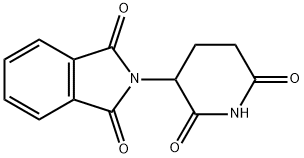
ChEBI: A dicarboximide that is isoindole-1,3(2H)-dione in which the hydrogen attached to the nitrogen is substituted by a 2,6-dioxopiperidin-3-yl group.
Thalidomide (Thalomid) is a derivative of glutamic acid
that is chemically related to glutethimide. It exerts a
number of biological effects as an immunosuppressive,
antiinflammatory, and antiangiogenic agent, yet its
mechanisms of action have not been fully elucidated.
Thalidomide potently inhibits production of tumor
necrosis factor (TNF) and interleukin (IL) 12, and its
effect on these and other cytokines may account for
some of its clinical effects.
26 g of N-phthalyl glutaminic acid anhydride are melted with 12 g of urea in
an oil bath at 170-180°C until the reaction is completed, which takes about 20
min. The reaction takes place with violent evolution of carbon dioxide and
ammonia. After cooling, the reaction product is recrystallised by fractionation
from 95% alcohol, and the first fraction may contain phthalic acid derivatives.
The required product N-(2,6-dioxo-3-piperidyl)-phthalimide melts at 269-
271°C. The yield is about 65-70% of the theoretical.
Algosediv;Asidon;Bonbrain;Contergan;Distaval;Funed;Glutanon;Hippuzon;Imidan;Isomin;Kevadone;Nerufatin;Neurosedyn;Pantosedive;Pro-ban;Quetimid;Sanodormin;Sedalis;Sedoval;Shinaito;Shinnibrol;Sleepan;Softenil;Softenon;Talimol;Tlargan;Yodomin.
Sedative, Hypnotic, Antiarthritic
World Health Organization (WHO)
Notwithstanding the highly potent teratogenic action of
thalidomide, this drug retains a place in the treatment of reactional lepromatous
leprosy and several serious dermatological conditions refractory to other
treatment. In many countries, the competent authorities have granted exemption
from licensing requirements to enable doctors to obtain limited supplies of
thalidomide under strictly controlled circumstances for use in named patients.
Arrangements have also been made by some national drug regulatory authorities
for thalidomide to be used in institutions concerned with the treatment of leprosy.
Organic amides/imides, such as Thalidomide, react with azo and diazo compounds to generate toxic gases. Flammable gases are formed by the reaction of organic amides/imides with strong reducing agents. Amides are very weak bases (weaker than water). Imides are less basic yet and in fact react with strong bases to form salts. That is, they can react as acids. Mixing amides with dehydrating agents such as P2O5 or SOCl2 generates the corresponding nitrile. The combustion of these compounds generates mixed oxides of nitrogen (NOx).
Thalidomide is a strong teratogen. Exposureto this compound during the first trimesterof pregnancy resulted in deformities inbabies. Infants born suffered from ameliaor phocomelia, the absence or severe shortening of limbs. Administration of thalidomide in experimental animals caused fetaldeaths, postimplantation mortality, and specific developmental abnormalities in theeyes, ear, central nervous system, musculoskeletal system, and cardiovascular system. Several thousand children were affected.The drug has been withdrawn from themarket.Thalidomide is usually administeredorally. Its toxicity is dose dependent. Someother effects are drowsiness, constipation andrash and nerve damage in the arms and legs.Interest in thalidomide resurged in recentyears because of its antitumor activity in thetreatment of multiple myeloma (Oxberry andJohnson 2006). The compound is an inhibitorof angiogenesis, that is, it prevents formationof new blood vessels in tumors. Also, it hasbeen found to be effective in treating AIDS-related Kaposis sarcoma.
Flash point data for Thalidomide are not available; however, Thalidomide is probably combustible.
Teratogen, sedative-hypnotic with inherent anti-inflammatory properties. A selective inhibitor of tumor necrosis factor α (TNF- α ) synthesis.
(±)-Thalidomide selectively inhibits biosynthesis of tumor necrosis factor α (TNF-α). It also functions as an inhibitor of angiogenesis, an immunosuppressive agent, a sedative and a teratogen. Furthermore, thalidomide is known to exhibit antitumor functions in refractory multiple myeloma.
Its absorption from the gastrointestinal tract is slow,
with peak plasma levels being reached after 3 to 6
hours. It appears to undergo nonenzymatic hydrolysis in
the plasma to a large number of metabolites.The elimination
half-life is approximately 9 hours.
Thalidomide is approved for use in the United
States for the treatment of cutaneous manifestations
of erythema nodosum leprosum, a potentially lifethreatening
systemic vasculitis that occurs in some patients
with leprosy.Although not approved for other indications,
thalidomide has also been shown to be very
effective in the management of Behet’s disease, HIVrelated
mucosal ulceration (aphthosis), and select cases
of lupus erythematosus.
Thalidomide is a highly teratogenic drug, characteristically
causing phocomelia (aplasia of the midportions of
the limbs). Even a single dose may cause fetal malformation.
Thalidomide should be prescribed to women of
childbearing potential only when no acceptable alternative
exists. Because it is not known whether thalidomide
is present in the ejaculate of males receiving the drug,
male patients must use a latex condom when engaging in
sexual activity with women of childbearing potential.
Other side effects of thalidomide may include sedation
(in fact, thalidomide was originally marketed in
Europe as a sleeping aid), constipation, and peripheral
neuropathy, which may be permanent.
Poison by ingestion. Moderately toxic by skin contact and intraperitoneal routes. Human teratogenic effects by ingestion: developmental abnormalities of the musculoskeletal and cardiovascular systems. Experimental reproductive effects. Questionable carcinogen with experimental tumorigenic and teratogenic data. Human mutation data reported. It was commonly used as a prescription drug in Europe in the late 1950s and early 1960s. Its use was dscontinued because it was lscovered to cause serious congenital abnormalities in the fetus, notably amelia and phocomelia (absence or deformity of the limbs, including hands and feet) when taken by a woman during early pregnancy. When heated to decomposition it emits toxic fumes of NOx. Used as a sedative and hypnotic.
Potentially hazardous interactions with other drugs
Thalidomide enhances the effects of barbiturates,
alcohol, chlorpromazine and reserpine.
Use with caution with other drugs that can cause
peripheral neuropathy.
Thalidomide is metabolised almost exclusively by nonenzymatic hydrolysis. In plasma, unchanged thalidomide
represents 80
% of the circulatory components.
Unchanged thalidomide was a minor component
(<3
% of the dose) in urine. In addition to thalidomide,
hydrolytic products N-(o-carboxybenzoyl) glutarimide
and phthaloyl isoglutamine formed via non-enzymatic
processes are also present in plasma and in urine.
The mechanism of teratogenecity of the thalidomide is not
clearly understood; however, recent studies have shed some light
on the potential mechanism. CRBN has been identified as
a thalidomide-binding protein. The teratogenic effects start with
binding of thalidomide to CRBN and inhibiting the associated
ubiquitin ligase activity.Many E3 ubiquitin ligases are important
for various physiological processes such as cell cycle regulation,
carcinogenesis, immune response, and development. It has been
shown that CRBN forms an E3 ubiquitin ligase complex with
damaged DNA binding protein 1 (DDB1) and Cullin-4A
(Cul4A), which are important factors for expression of the
fibroblast growth factor Fgf8 in zebra fish and chicks as well as
the limb outgrowth. In thalidomide-treated zebra fish embryos,
formation of proximal endoskeletal disc of the pectoral fin was
severely inhibited and the otic vesicle size was significantly
reduced. Pectoral fins and otic vesicles in fish share common
molecular pathways with tetrapod limbs and ears development.
Down-regulation of the CRBN complex causes similar developmental
defects in zebra fish. Thalidomide does not cause limb
malformations in rodents but does in rabbits, monkeys. In
pregnant rats, thalidomide can cause other types of developmental
defects such as vertebral column, rib, and eye malformation.
There is very strong conservation of the amino acid
sequence of CRBN between rat, rabbit, monkey, mouse and
human and has been shown that they can bind to thalidomide.
The role and importance of CRBN in different species have not
been identified; therefore, the degree of teratogenecity could
depend in part on the nature of the protein substrates that are
modified by CRBN activity during embryonic development.
There are some species differences in teratogenecity between
thalidomide and its close analogs.
Thalidomide was briefly used as an antiemetic and sedative to treat “morning sickness,” anxiety, and insomnia before being removed from the market due to its association with neonatal mortality and severe birth defects. It reentered the clinical marketplace decades later as an antiangiogenic and anti-inflammatory agent effective against several forms of cancer, leprosy, and some inflammatory disorders. Thalidomide and its analogs, Lenalidomide and Pomalidomide, are immunomodulatory drugs that bind the CRL4 E3 ubiquitin ligase substrate receptor Cereblon to promote the ubiquitination and targeted degradation of several transcription factors. These compounds target several proteins, including C2H2 zinc finger transcription factors Ikaros, Aiolos, and ZFP91, as well as casein kinase 1α, to control a broad transcriptional network. Thalidomide can also downregulate the zinc finger transcription factor SALL4, which is implicated in some human malformation syndromes, including Duane-radial ray syndrome and Acro-renal-ocular syndrome.
[1] TAKUMI ITO. Identification of a Primary Target of Thalidomide Teratogenicity[J]. Science, 2010, 327 5971. DOI:
10.1126/science.1177319[2] W B WEGLICKI. Inhibition of tumor necrosis factor-alpha by thalidomide in magnesium deficiency.[J]. Molecular and Cellular Biochemistry, 1993, 129 2: 195-200. DOI:
10.1007/bf00926368[3] R J D’AMATO. Thalidomide is an inhibitor of angiogenesis.[J]. Proceedings of the National Academy of Sciences of the United States of America, 1994, 91 9: 4082-4085. DOI:
10.1073/pnas.91.9.4082