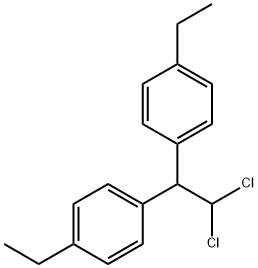
1,1-dichloro-2,2-bis-(4-
ethylphenyl)ethane (mp 60–61 C) is a rapidly biodegradable
insecticide with very low mammalian toxicity, rat
oral LD50 8170 mg/kg. It has been used as a household
insecticide.
Crystalline solid; mp 56°C (132.8°F); insoluble in water; soluble in acetone, kerosene,and diesel fuel.
Ethyl-DDD was commercially produced via a Friedel-Crafts-type condensation reaction. In this process, ethylbenzene (or a suitable ethyl-substituted aromatic) is condensed with dichloroacetaldehyde (or its ethyl acetal equivalent) in the presence of a strong acid catalyst such as concentrated sulphuric acid. This yields the technical-grade product, predominantly the para,para'-isomer along with smaller amounts of ortho,para'-isomer, similar to the synthesis of related organochlorine insecticides like DDD from chlorobenzene and dichloroacetaldehyde derivatives.
Crystals when pure. Technical grade a light yellow waxy solid.
PERTHANE (TM) is sensitive to heat. PERTHANE (TM) is incompatible with alkalis. PERTHANE (TM) is readily dehydrochlorinated. PERTHANE (TM) is slightly corrosive to iron, zinc, and aluminum.
Mildly toxic by ingestion; the oral medianlethal doses in all experimental animalswere >5000 mg/kg; however, producedmoderate to severe effects when administeredintravenously; toxic properties are somewhatsimilar to those of DDT; susceptible tostorage in fat; also bioaccumulative; ateratogenic substance; sufficient evidenceof carcinogenicity in mice, but inadequateevidence in other animals; cancer-causingeffects in human unknown.
LD50 oral (rat): 6600 mg/kg
LD50 oral (wild bird): 9000 mg/kg
LD50 intravenous (rat): 73 mg/kg.
Flash point data for PERTHANE (TM) are not available. PERTHANE (TM) is probably combustible.
Contact action. Ethyl-DDD disrupts nerve signal transmission, leading to hyperexcitation, paralysis, and death in target insects
Poison by intravenous
route. Mdly toxic by ingestion.
Questionable carcinogen with experimental
carcinogenic and tumorigenic data.
Experimental teratogenic and reproductive
effects. Mutation data reported. A pesticide.
When heated to decomposition it emits
toxic fumes of Cl-. See also
CHLORINATED HYDROCARBONS,
ALIPHATIC.