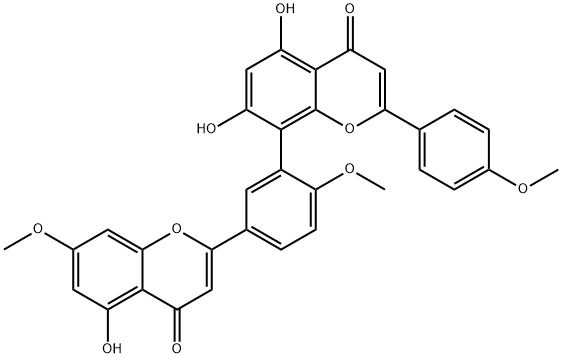
Sciadopitysin is a biflavonoid originally isolated from G. biloba and has diverse biological activities. It reduces cytotoxicity induced by amyloid-β (1-42) (Aβ42; ) in PC12 cells (EC50 = 9.84 μM). Sciadopitysin (0.1-10 μM) decreases methylglyoxal-induced insulin secretion, production of reactive oxygen species (ROS), cardiolipin peroxidation, and cytotoxicity in RIN-m5F pancreatic β-cells. It inhibits P-glycoprotein (P-gp; IC50 = 53.42 μM) and increases cellular toxicity of paraquat and paclitaxel in MDR1-MDCKII cells. Sciadopitysin inhibits RANKL-induced mRNA expression of the osteoclast-specific genes CTSK, TRAP, and MMP-9, activation of NF-κB, and osteoclastogenesis in a mouse model of LPS-induced bone loss.
White crystals, soluble in organic solvents such as methanol, ethanol, and DMSO, derived from ginkgo leaves and yew branches and leaves.
Sciadopitysin is a type of biflavonoids in leaves from ginkgo biloba[1]. Sciadopitysi inhibits RANKL-induced osteoclastogenesis and bone loss by inhibiting NF-κB activation and reducing the expression of c-Fos and NFATc1[2].
ChEBI: A biflavonoid that is a 7, 4', 4'''-trimethyl ether derivative of amentoflavone.
Sciadopitysin (i.p.; 10 mg/kg; every other day for 8 days) can reverse the bone loss in LPS-induced mice model (C57BL/6 mice; 6 weeks old)[2].
ROS | MMP(e.g.TIMP) | NO | TNF-α | ATPase | cAMP | Beta Amyloid
[1] Brianon-Scheid F, et al. HPLCSeparationandQuantitativeDeterminationofBiflavonesinLeavesfromGinkgo biloba. Planta Med.1983 Dec;49(12):204-7. DOI:
10.1055/s-2007-969851[2] SciadopitysinsuppressesRANKL-mediatedosteoclastogenesisandpreventsbonelossinLPS-treatedmice. Int Immunopharmacol.2017 Aug;49:109-117. DOI:
10.1016/j.intimp.2017.05.029