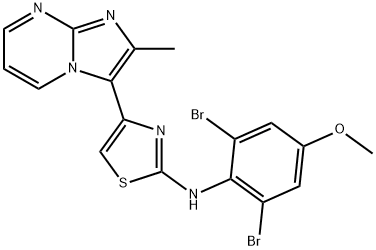
[1] ANTONIJA KRESO. Self-renewal as a therapeutic target in human colorectal cancer[J]. Nature Medicine, 2013, 20 1: 29-36. DOI:
10.1038/nm.3418[2] MATHANGI SRINIVASAN. Downregulation of Bmi1 in breast cancer stem cells suppresses tumor growth and proliferation.[J]. Oncotarget, 2017: 38731-38742. DOI:
10.18632/oncotarget.16317[3] QIONG WANG. Pharmacological inhibition of Bmi1 by PTC-209 impaired tumor growth in head neck squamous cell carcinoma.[J]. Cancer Cell International, 2017: 107. DOI:
10.1186/s12935-017-0481-z[4] YU KONG. Targeting of BMI-1 with PTC-209 inhibits glioblastoma development.[J]. Cell Cycle, 2018, 17 10: 1199-1211. DOI:
10.1080/15384101.2018.1469872[5] R. ELANGO. Concurrent targeting of BMI1 and CDK4/6 abrogates tumor growth in vitro and in vivo[J]. Scientific Reports, 2019. DOI:
10.1038/s41598-019-50140-0[6] CARA E SHIELDS. Epigenetic regulator BMI1 promotes alveolar rhabdomyosarcoma proliferation and constitutes a novel therapeutic target.[J]. Molecular Oncology, 2021, 15 8: 2156-2171. DOI:
10.1002/1878-0261.12914[7] YIJING GUO. Chemical suppression of specific C-C chemokine signaling pathways enhances cardiac reprogramming.[J]. The Journal of Biological Chemistry, 2019, 294 23: 9134-9146. DOI:
10.1074/jbc.ra118.006000[8] GIANLUCA TESTA. Bmi1 inhibitor PTC-209 promotes Chemically-induced Direct Cardiac Reprogramming of cardiac fibroblasts into cardiomyocytes.[J]. Scientific Reports, 2020: 7129. DOI:
10.1038/s41598-020-63992-8