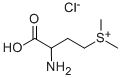
1. Methionine is reacted with chloromethane under pressure and then filtered to obtain a DL-METHIONINE METHYLSULFONIUM CHLORIDE solution; 2. The DL-METHIONINE METHYLSULFONIUM CHLORIDE solution prepared in step 1 is filtered and concentrated under reduced pressure to obtain a powder; 3. The powder from step 2 is added to methanol and slurryed, then cooled until crystallization occurs, forming a DL-METHIONINE METHYLSULFONIUM CHLORIDE mixture; 4. The mixture is placed in a centrifuge, and the filter cake is washed with methanol. The filter cake is discharged when no continuous droplets flow out; 5. The filter cake is dried to obtain pharmaceutical-grade DL-METHIONINE METHYLSULFONIUM CHLORIDE.
DL-Methionine methylsulfonium chloride, also named Vitamin U, is a powerful antioxidant. It is a sulfur derivative substance. Graviola leaves contain much vitamin U[1]. Vitamin U have unique antioxidant effect. It could prevents Galactosamine-induced gastric damage and protects pentylenetetrazole-induced brain damage in rats[2-3].
Vitamin U (DL-methionine methylsulfonium
chloride) is a natural methionine-derivative,
found as an active component in the
methionine cycle of plants where it serves as
a substrate for methyl transferases
(Augspurger et al., 2005). Historically this
compound has been utilized as either a cure or preventative against gastric and duodenal
ulcers (Nakamura et al., 1981).
DL-Methionine Methylsulfonium Chloride is a compound comprised of γ-glutamyl peptide and amino acid that have a sucrose-like taste.
S-Methionine methylsulfonium (SMMS) chloride is a derivative of methionine metabolism in some plants. SMMS has potent therapeutic effects on gastrointestinal ulceration potentially via its ability to promote dermal fibroblast migration and growth.
[1] Choi E, et al. Increased Intestinal Absorption of Vitamin U in Steamed Graviola Leaf Extract Activates Nicotine Detoxification. Nutrients, 2019; 11.
[2] Topaloglu D, et al. Gastroprotective effect of vitamin U in D-galactosamine-induced hepatotoxicity. Journal of Biochemical and Molecular Toxicology, 2022; 36: e23124.
[3] Bayrak G, et al. The protective effect of vitamin U on pentylenetetrazole-induced brain damage in rats, 2022; 36: e23169.