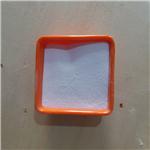
Antimony oxide is widely used as a flame retardant in plastics such as PVC, PP, PE, PS, ABS, and PU. It boasts high flame retardant efficiency and minimal impact on the mechanical properties of the substrate (e.g., fire-resistant uniforms and gloves, flame-retardant electronic device housings, flame-retardant vehicle bodies, flame-retardant wires and cables, etc.). In the rubber industry, it is used as a filler and flame retardant. In enamel and ceramic products, it is used as an enamel masking agent. In the electronics industry, it is used to manufacture pressure-sensitive ceramics and non-magnetic ceramics for magnetic head parts. In the coatings industry, it is used as a white pigment and flame retardant in paints. It is used as a catalyst in organic synthesis. In glass and crystal products, it is used as a glass clarifying agent.
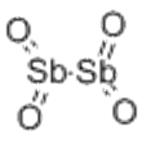
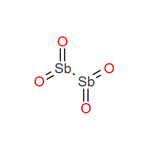
Antimony (IV) oxide are minute, lustrous crystals, yellow when heated. Infusible. Decomposes to Sb2O3 and O2 at very high temperatures. Virtually
insoluble in water, dilute acids and alkalis. Soluble in hot concentrated HCl and concentrated H2SO4. Cubic or rhombic
crystals.
Antimony (V) oxide is ignited to red heat for about two weeks
in a Pt crucible at 800-900°C.
Other method: boiling Sb2O3 with
nitric acid, evaporating until fuming, and igniting as above.