in vivo
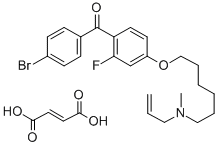
Ro 48-8071 lowers LDL-C maximally appr 60% at 150 μmol/kg per day, with no further reduction up to 300 μmol/kg per day, leaving HDL-C unchanged at all doses in hamsters. Ro 48-8071 (≥00 μmol/kg per day) increases the amount of MOS in liver of hamsters. Ro 48-8071 (300 μmol/kg per day) remarkedly and significantly reduces VLDL secretion of hamsters[1]. Ro 48-8071 (5 or 20 mg/kg) significantly reduces in vivo tumor growth in mice, without weight loss of the mice. Furthermore, Ro 48-8071 at a concentration of 20 mg/kg, completely eradicates two of the 12 tumors being monitored in the mice in the timeframe tested[2]. Ro 48-8071 (20 mg/day/kg body weight) leads to a rapid and sustained inhibition (>50%) of cholesterol synthesis in the whole small intestine of BALB/c mice. Sterol synthesis is also reduced in the large intestine and stomach[4].
References
[1] Morand OH, et al. Ro 48-8.071, a new 2,3-oxidosqualene:lanosterol cyclase inhibitor lowering plasma cholesterol in hamsters, squirrel monkeys, and minipigs: comparison to simvastatin. J Lipid Res. 1997 Feb;38(2):373-90. PMID:9162756
[2] Liang Y, et al. Cholesterol biosynthesis inhibitor RO 48-8071 suppresses growth of hormone-dependent and castration-resistant prostate cancer cells. Onco Targets Ther. 2016 May 30;9:3223-32 DOI:
10.2147/OTT.S105725[3] Liang Y, et al. Cholesterol biosynthesis inhibitors as potent novel anti-cancer agents: suppression of hormone-dependent breast cancer by the oxidosqualene cyclase inhibitor RO 48-8071. Breast Cancer Res Treat. 2014 Jul;146(1):51-62. DOI:
10.1007/s10549-014-2996-5[4] Chuang JC, et al. Sustained and selective suppression of intestinal cholesterol synthesis by Ro 48-8071, an inhibitor of 2,3-oxidosqualene:lanosterol cyclase, in the BALB/c mouse. Biochem Pharmacol. 2014 Apr 1;88(3):351-63. DOI:
10.1016/j.bcp.2014.01.031