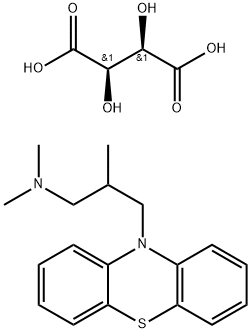
Alimemazine hemitartrate (10 mg/kg, intraperitoneal injection, once a day for 3 weeks) promotes mouse β-cell growth[2].
Alimemazine hemitartrate (10 mg/kg, intraperitoneal injection, once a day for 22 days) synergistically reduces the progression of diabetes in NOD mice[2].
Alimemazine hemitartrate (10 mg/kg, intraperitoneal injection, once a day for 7 days) promotes the proliferation and survival of β-cells in normal mice, but has little effect on β-cell defects caused by IRS2 deficiency[2].
Alimemazine hemitartrate (10 mg/kg, oral gavage, two doses) does not reduce mouse lung virus titers[3].
| Animal Model: | Pdx1+/– mice[2] |
| Dosage: | 10 mg/kg, once a day for 3 weeks |
| Administration: | Intraperitoneal injection (i.p.) |
| Result: | Increased HOMA 2%B and normalized glucose tolerance in mice. |
| Animal Model: | Irs2-/–mice[2] |
| Dosage: | 10 mg/kg, once a day for seven days |
| Administration: | Intraperitoneal injection (i.p.) |
| Result: | Did not restore the function of β cells, but promoted β cell growth and increased the area of β cells in normal mice.
Increased the concentration of IRS2 protein, had no effect on glucose tolerance in mice, and did not change the insulin sensitivity of mice.
|
| Animal Model: | SARS-CoV-2 multiplication in mice[3] |
| Dosage: | 10mg/kg, at 1 h prior to and 24 h after virus inoculation |
| Administration: | i.g. |
| Result: | Did not reduce lung virus titers. |