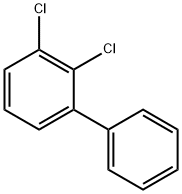
Description
2,3-Dichlorobiphenyl is one of 209 polychlorinated biphenyls (PCBs). PCBs are a group of synthetic organic compounds with 1-10 chlorine atoms attached to biphenyl. They were manufactured as commercial mixtures but were banned in the 1970s because they were found to bioaccumulate and cause harmful health effects. However, PCBs do not break down readily and are still in the environment. 2,3-Dichlorobiphenyl decreases the levels of dopamine in PC12 adrenal medulla cells (EC50 = 173 μM). 2,3-Dichlorobiphenyl (10 μg/L) increases the percentage of X. laevis intersex males. It is a contaminant in urban soil samples.
References
[1] WILLIAM SHAIN Richard S Brain Bush. Neurotoxicity of polychlorinated biphenyls: Structure-activity relationship of individual congeners[J]. Toxicology and applied pharmacology, 1991, 111 1: Pages 33-42. DOI:
10.1016/0041-008x(91)90131-w[2] ZHAN-FEN QIN. Effects of Chinese domestic polychlorinated biphenyls (PCBs) on gonadal differentiation in Xenopus laevis.[J]. Environmental Health Perspectives, 2003, 111 4: 553-556. DOI:
10.1289/ehp.5620[3] A. CACHADA . The variability of polychlorinated biphenyls levels in urban soils from five European cities[J]. Environmental Pollution, 2009, 157 2: Pages 511-518. DOI:
10.1016/j.envpol.2008.09.002