Chemical Properties
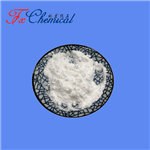
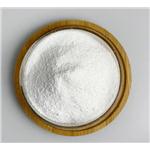
white to light yellow crystal powde
Uses
The naturally occuring isomer is the L-form which has been found in apples and many other fruits and plants. Selective α-amino protecting reagent for amino acid derivatives. Versatile synthon for the preparation of chiral compounds including κ-opioid rece
Uses
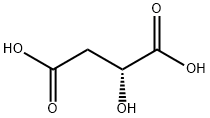
D-(+)-Malic acid used as an acidulant and flavoring agent, food additive. And it is also used in the place of the less sour citric acid in sour sweets.
Uses
D-(+)-Malic acid can be used:
- As a starting material for the enantioselective total synthesis of ()-erinapyrone B.
- As a chiral organocatalyst in the synthesis of α-aminophosphonates from various aldehydes, aniline, and diethyl phosphite.
Definition
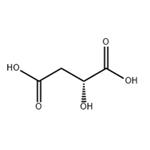
ChEBI: An optically active form of malic acid having (R)-configuration.
Biological Activity
D-(+)-Malic acid, an active isomer of Malic acid, is a competitive inhibitor of L(--)malic acid transport.
Synthesis
Malic acid is isolated from immature apples; industrially prepared is obtained by catalytic oxidation of benzene, then reacting with water at high temperature and high pressure to generate maleic anhydride.
in vitro
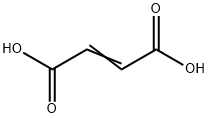
Some bacteria belonging to Arthrobacter, Brevibacterium, Corynebacterium, Pseudomonas, Bacillus, and Acinetobacter produced D-(+)-Malic acid (D-Malic acid) from Maleic acid when the cells grown in a medium containing citraconic acid are reacted aerobically with Maleic acid in the pH 7.0 phosphate buffer containing 0.1% sodium chloride.
Research
Functional studies demonstrated that D(+)-Malic acid significantly improved intestinal barrier integrity and alleviated intestinal damage
[1].
References
[1] Gong, T., Lu, X., Zhang, H., Su, W., Jin, Y., He, H., Yao, B., Jin, M., Wang, Y., & Cheng, Y. (2025). Intestinal microbiota-derived d-(+)-malic acid promotes pBD1 expression via p-p38/ATF1 signaling pathway to maintain porcine intestinal health. International Immunopharmacology, 154, Article 114552.
https://doi.org/10.1016/j.intimp.2025.114552