Uses
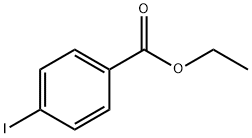
Ethyl 4-iodobenzoate can be used in the synthesis of biphenyl derivatives via Negishi cross coupling with the intermediates of the type ArMg(tmp)·2LiCl (tmp = trimethylolpropane). It can also be used as a starting material in the synthesis of
p-carbomethoxyphenylmagnesium bromide, a polyfunctional organometallic reagent that can be used as building block in the synthesis of complex target molecules.
Synthesis
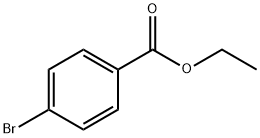
General procedure for the synthesis of ethyl p-iodobenzoate from ethyl 4-bromobenzoate: under nitrogen protection, Cu2O (7.2 mg, 10 mol%), L-proline (11.5 mg, 20 mol%), ethyl 4-bromobenzoate (0.50 mmol), potassium iodide (KI, 249 mg, 0.75 mmol) and ethanol (EtOH, 1.5 mL). After sealing the Schlenk tube with a PTFE valve, the reaction mixture was stirred at 110 °C and the reaction process was monitored by gas chromatography (GC) analysis. Upon completion of the reaction, the yield was determined by GC using an appropriate internal standard (e.g., chlorobenzene or 1-chloro-4-methylbenzene) for highly volatile products; or the solvent was removed by distillation under reduced pressure. The resulting crude product was purified by silica gel column chromatography (eluent ratio of petroleum ether/ethyl acetate = 10/1) to obtain the target product ethyl p-iodobenzoate.
References
[1] Catalysis Today, 2016, vol. 274, p. 129 - 132
[2] Chemical Communications, 2012, vol. 48, # 33, p. 3993 - 3995
[3] Angewandte Chemie - International Edition, 2015, vol. 54, # 1, p. 263 - 266
[4] Angew. Chem., 2015, vol. 127, # 01, p. 265 - 268,4
[5] Catalysis Science and Technology, 2017, vol. 7, # 10, p. 2110 - 2117