Chemical Properties
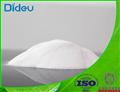
white to light yellow crystal powder
Uses
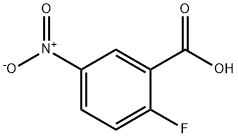
2-Fluoro-5-nitrobenzoic acid may be used in the synthesis of:
- dibenz[b,f]oxazepin-11(10H)-ones, via the nucleophilic aromatic substitution (SNAr) of fluorine in 2-fluoro-5-nitrobenzoic acid with the OH of various 2-aminophenols on solid support
- synthesis of substituted dibenzazocines on solid support, via SNAr of fluorine in 2-fluoro-5-nitrobenzoic acid with the OH function of the immobilized polysubstituted phenols
- in the synthesis of oxazepines
Uses
2-Fluoro-5-nitrobenzoic acid may be used in the synthesis of dibenz[b,f]oxazepin-11(10H)-ones, via the nucleophilic aromatic substitution (SNAr) of fluorine in 2-fluoro-5-nitrobenzoic acid with the OH of various 2-aminophenols on solid support, synthesis of substituted dibenzazocines on solid support, via SNAr of fluorine in 2-fluoro-5-nitrobenzoic acid with the OH function of the immobilized polysubstituted phenols, in the synthesis of oxazepines.
General Description
2-Fluoro-5-nitrobenzoic acid is reported to react with an aldehyde, isonitrile and a primary amine tethered to a Boc-protected internal amino or hydroxyl nucleophile, to afford the Ugi product.
Synthesis
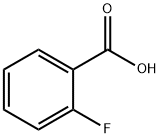
General procedure for the synthesis of 2-fluoro-5-nitrobenzoic acid from o-fluorobenzoic acid: Nitric acid (60% solution, 5.0 mL) was slowly added dropwise to pre-cooled concentrated sulfuric acid (5.0 mL), and the reaction temperature was controlled to not exceed 10 °C. Subsequently, o-fluorobenzoic acid (2.1 g, 15.0 mmol) was added in batches and the reaction temperature was maintained between 15 and 25 °C. The reaction mixture was stirred at room temperature for 2 hours. After completion of the reaction, the reaction was quenched by addition of ice water and the precipitate was collected by filtration. The product was dried at room temperature to give the intermediate 2-fluoro-5-nitrobenzoic acid as a white powder. Yield: 93%; Melting point: 135-137 °C; 1H NMR (300 MHz, DMSO-d6): δ=7.32 (t, 1H, H3, 3JH3_H4=JH3-F=9.2 Hz), 8.43 (dt, 1H, H4, 3JH4_H3=9.2 Hz, 4JH4_F=4JH4_H6=3.5 Hz), 8.89 (dd, 1H, H6, 4JH6_F=5.8 Hz, 4JH6_H4=3.0 Hz); 13C NMR (75 MHz, DMSO-d6): δ=118.7 (d, C1, 2JC-F=10.9 Hz), 118.7 (d, C3, 2JC-F=25.0 Hz), 128.9 (d, C6, 3JC -F=2.2 Hz), 130.6 (d, C4, 3JC-F=10.9 Hz), 143.9 (C5), 165.7 (d, C2, 1JC-F=272.0 Hz), 166.7 (d, COOH, 3JC-F=3.8 Hz).
References
[1] Patent: WO2012/85003, 2012, A1. Location in patent: Page/Page column 83
[2] Journal of Organic Chemistry, 2008, vol. 73, # 2, p. 538 - 549
[3] Journal of Heterocyclic Chemistry, 1998, vol. 35, # 6, p. 1301 - 1304
[4] Journal of Medicinal Chemistry, 2003, vol. 46, # 10, p. 1905 - 1917
[5] Australian Journal of Chemistry, 1981, vol. 34, # 5, p. 969 - 979