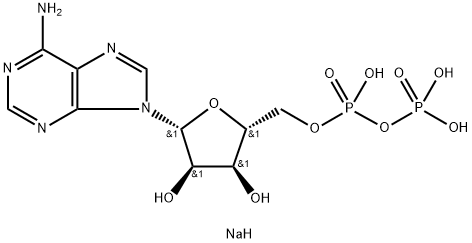
Description
Adenosine 5′-diphosphate sodium salt (ADP-NA) is an adenine nucleotide phosphorylated into ATP by ATPase. This phosphorylation is a crucial part of cellular homeostatis as it allows energy storage and is involved in nucleic acid metabolism.
Uses
Adenosine 5'-diphosphate sodium salt (ADP-NA) is a nucleoside diphosphate, which is the product of ATP dephosphorylation by ATPases. Adenosine 5'-diphosphate sodium salt induces human platelet aggregation and inhibits stimulated adenylate cyclase by an action at P2T-purinoceptors[1][2][3].
Biological Functions
Adenosine 5′-diphosphate sodium salt (ADP-NA) affects platelet activation through its interaction with ADP receptors P2Y1, P2Y12 and P2X1. Upon its conversion to adenosine by ecto-ADPases, platelet activation is inhibited via adenosine receptors.
IC 50
Human Endogenous Metabolite
References
[1] Arts IC, et al. Adenosine 5'-triphosphate (ATP) supplements are not orally bioavailable: a randomized, placebo-controlled cross-over trial in healthy humans. J Int Soc Sports Nutr. 2012 Apr 17;9(1):16. DOI:
10.1186/1550-2783-9-16[2] Noel J. Cusack, et al. Effects of phosphate-modified analogs of adenosine 5′-diphosphate and adenosine 5′‐triphosphate at P2T-purinoceptors mediating human platelet activation by ADP. April 1996.
[3] Adenosine-5'-diphosphate