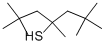
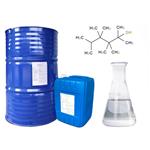
Uses
Tert-dodecylthiol is used in the polymer industry and as a processing regulator, processing aid (i.e. pH value regulator, flocculant and precipitant), lubricant, for the manufacture of plastic materials, resins, paints, coatings, rubber products, and mining, among other things.
General Description
Clear white to pale yellow liquid with a repulsive odor.
Air & Water Reactions
Sensitive to moisture. Sensitive to prolonged exposure to air. Insoluble in water.
Reactivity Profile
tert-dodecylthiol is incompatible with acids, diazo and azo compounds, halocarbons, isocyanates, aldehydes, alkali metals, nitrides, hydrides, and other strong reducing agents. Generate heat and in many cases hydrogen gas and possibly hydrogen sulfide with these materials. May liberate hydrogen sulfide upon decomposition or reaction with an acid. Incompatible with oxygen. Incompatible with strong oxidizing agents . May be sensitive to heat.
Fire Hazard
tert-dodecylthiol is combustible.
Safety Profile
Poison by ingestion.
Moderately toxic by intraperitoneal route. A skin
and eye irritant. Combustible when exposed to heat
or flame; can react vigorously with oxidizing
materials. To fight fire, use foam, Con, dry
chemical. When heated to decomposition it emitstoxic fumes of SOx,. See also MERCAPTANS and
SULFATE
Synthesis
Twelve grams of water and 40 grams of dodecene were introduced into the plant through a funnel. After sealing the plant, the reaction mixing pump was put into operation (speed: 2800 min-1) and then the entire pumping circulation system (including the pump pressure head), which was manufactured in a jacketed design, was restored to its initial temperature. The reaction was initiated by gradually injecting the first 10 bar of carbon dioxide, followed by a gradual injection of 20 bar of hydrogen sulfide gas to a total pressure of about 30 C. 31 bar. The H2S feed to the reactor system was kept open during the experiment so that the amount of hydrogen sulfide that had been reacted could be replenished to the reaction system. Over the next 2 hours, the mixture was uniformly heated to 60C. After an additional 3 hours, all dissolved gaseous components were removed from the biphasic liquid sample by depressurizing at the discharge valve and further heating to 100C. The composition of the organic liquid phase (upper phase) was analyzed by gas chromatography and it was possible to differentiate between the reactants (olefins), the main product (tertiary dodecyl mercaptan) and the minor components (thioethers).