Description
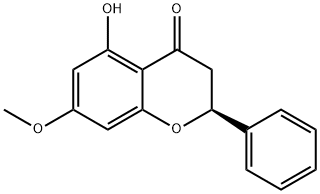
Pinostrobin is a flavonoid with diverse biological activities, including antioxidant, anti-inflammatory, and anticancer properties. It induces quinone reductase (QR) in murine hepatoma cells with a QR doubling concentration of 500 nM. Pinostrobin inhibits TNF-α and IL-1β production in RAW 264.7 macrophages (IC
50s = 17.28 and 23.5 μM, respectively) and in LPS-stimulated rats (48.6 and 55% reduction, respectively). Pinostrobin also shows selective cytotoxicity for CCRF-CEM leukemia cells (IC
50 = 10.2 μM) in a panel of eight cancer cell lines (IC
50s = >30 μM).
Uses
Pinostrombin is a useful research chemical that can be used for chemical fingerprinting, isolating, and characterizing of polyphenol compounds. It can also be used as a potential compound for TMPRSS2 inhibition for Covid-19 therapy.
Definition
ChEBI: A monohydroxyflavanone that is (2S)-flavanone substituted by a hydroxy group at position 5 and a methoxy group at position 7 respectively.
References
[1] NEERAJ K. PATEL Kamlesh K B Gaurav Jaiswal. A review on biological sources, chemistry and pharmacological activities of pinostrobin[J]. Natural Product Research, 2016, 30 18: Pages 2017-2027. DOI:
10.1080/14786419.2015.1107556[2] JED W. FAHEY Katherine K S. Pinostrobin from Honey and Thai Ginger (Boesenbergia pandurata): A Potent Flavonoid Inducer of Mammalian Phase 2 Chemoprotective and Antioxidant Enzymes[J]. Journal of Agricultural and Food Chemistry, 2002, 50 25: 7472-7476. DOI:
10.1021/jf025692k[3] NEERAJ K. PATEL Kamlesh K B. Pinostrobin and Cajanus lactone isolated from Cajanus cajan (L.) leaves inhibits TNF-α and IL-1β production: In vitro and in vivo experimentation[J]. Phytomedicine, 2014, 21 7: Pages 946-953. DOI:
10.1016/j.phymed.2014.02.011[4] J.S. ASHIDI . Ethnobotanical survey and cytotoxicity testing of plants of South-western Nigeria used to treat cancer, with isolation of cytotoxic constituents from Cajanus cajan Millsp. leaves[J]. Journal of ethnopharmacology, 2010, 128 2: Pages 501-512. DOI:
10.1016/j.jep.2010.01.009