Description
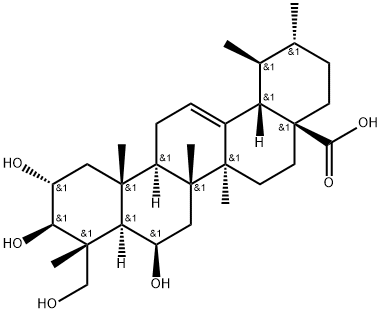
Madecassic acid is a triterpenoid that has been found in
C. asiatica and has diverse biological activities. It inhibits LPS-induced production of nitric oxide (NO), prostaglandin E
2 (PGE
2; ), TNF-α, IL-1β, and IL-6 in RAW 264.7 macrophages when used at a concentration of 150 μg/ml. Madecassic acid (0.05 and 0.1% in the diet) decreases plasma levels of fibrinogenin and triglycerides, as well as heart and kidney levels of reactive oxygen species (ROS), in a mouse model of diabetes induced by streptozotocin (STZ; ). It decreases tumor growth in a CT26 murine colon cancer model in a dose-dependent manner.
Chemical Properties
White powder
Uses
Madecassic Acid is a terpenoid with an ursane skeleton isolated from Centella asiatica. Madecassic Acid displays anti-inflammatory properties as a result of iNOS, COX-2, TNF-alpha, IL-1beta, and IL-6 inhibition via the downregulation of NF-kappaB activation in RAW 264.7 macrophage cells. Madecassic Acid is found in cosmetic products due to its skin-protective activities.
Definition
ChEBI: A pentacyclic triterpenoid that is ursane substituted by a carboxy group at position 28 and hydroxy groups at positions 2, 3, 6 and 23 (the 2alpha,3beta,6beta stereoisomer).
References
[1] JONG-HEON WON. Anti-inflammatory effects of madecassic acid via the suppression of NF-kappaB pathway in LPS-induced RAW 264.7 macrophage cells.[J]. Planta medica, 2010: 251-257. DOI:
10.1055/s-0029-1186142[2] Y. HSU. Anti-Diabetic Effects of Madecassic Acid and Rotundic Acid[J]. Nutrients, 2015, 7 1: 10065-10075. DOI:
10.3390/nu7125512[3] HUA ZHANG. Madecassic acid inhibits the mouse colon cancer growth by inducing apoptosis and immunomodulation.[J]. Journal of Buon, 2014, 19 2: 372-376.