Uses
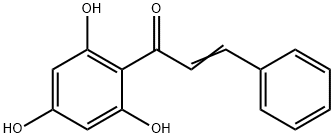
Pinocembrin chalcone (2',4',6'-Trihydroxychalcone) is an antibacterial compound from Helichrysum Trilineatum. Pinocembrin chalcone facilitates AMP-activated protein kinase (AMPK) activation, improves glucose tolerance, increases muscle FAO and reduces fat accumulation in the liver and skeletal muscles in high-fat diet-induced (HFD) diabetic mice. Pinocembrin chalcone is promising for research of gastric ulcers and diabetes[1][2].
Definition
ChEBI: Pinocembrin chalcone is a member of the class of chalcones that is trans-chalcone substituted by hydroxy groups at positions 2', 4' and 6' respectively. It has a role as a plant metabolite and an antifungal agent. It is functionally related to a trans-chalcone.
in vivo
Pinocembrin chalcone (30 mg/kg, oral gavage, daily for 3 weeks) improves glucose tolerance and fat accumulation through fatty acid oxidation rate increase in skeletal muscle, which is mainly mediated by AMPK activation in HFD-induced diabetic mice[2].
| Animal Model: | HFD-induced diabetic mice[2] |
| Dosage: | 30 mg/kg |
| Administration: | oral gavage, daily for 3 weeks |
| Result: | Reduced the circulating FFA levels and fat accumulation in the liver and muscles by increasing FAO, which improved glucose tolerance in HFD-induced diabetic mice. |
References
[1] P D Bremner, et al. Pinocembrin Chalcone: An Antibacterial Compound From Helichrysum Trilineatum. Planta Med. 1998 Dec;64(8):777. DOI:
10.1055/s-2006-957585[2] Shin J, et al. Antidiabetic effects of trihydroxychalcone derivatives via activation of AMP-activated protein kinase[J]. Journal of Industrial and Engineering Chemistry, 2018, 60: 177-184.