Description
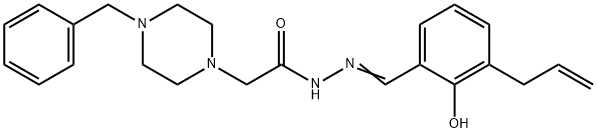
PAC-1 (315183-21-2) is a procaspase-activating compound, directly activating procaspase-3, producing caspase-3, EC50=0.22 μM.1 It is less potent at activating procaspase-7, EC50=4.5 μM. It induces apoptosis in a variety of cancer cell lines. The mechanism of activation involves sequestering inhibitory zinc ions thus allowing procaspase-3 to autoactivate.2 Sensitizes cancer cells to various chemotherapeutic agents.3
Uses
PAC-1 is a potent procaspase-3 activator with EC50 of 0.22 μM.
Biological Activity
Procaspase-activating compound; activates procaspase-3 to produce caspase-3 (EC 50 = 0.22 μ M). Also activates procaspase-7 in a less efficient manner (EC 50 = 4.5 μ M). Pro-apoptotic; induces apoptosis in both cancerous and non-cancerous cells dependent on procaspase-3 concentration (IC 50 values are 0.003-1.41 and 5.02-9.98 μ M respectively).
References
[1] KARSON S PUTT. Small-molecule activation of procaspase-3 to caspase-3 as a personalized anticancer strategy[J]. Nature chemical biology, 2006, 2 10: 543-550. DOI:
10.1038/nchembio814[2] QUINN P. PETERSON . PAC-1 Activates Procaspase-3 in Vitro through Relief of Zinc-Mediated Inhibition[J]. Journal of Molecular Biology, 2009, 388 1: Pages 144-158. DOI:
10.1016/j.jmb.2009.03.003[3] RACHEL C. BOTHAM. Small-Molecule Procaspase-3 Activation Sensitizes Cancer to Treatment with Diverse Chemotherapeutics[J]. ACS Central Science, 2016, 2 8: 545-559. DOI:
10.1021/acscentsci.6b00165