Uses
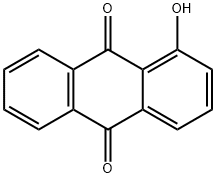
1-Hydroxyanthraquinone, a naturally occurring compound with oral activity from some plants like Tabebuia avellanedae, exhibits carcinogenic effect[1].
Definition
ChEBI: 1-hydroxyanthraquinone is a monohydroxyanthraquinone.
Synthesis Reference(s)
The Journal of Organic Chemistry, 55, p. 350, 1990
DOI: 10.1021/jo00288a062
in vivo
1-Hydroxyanthraquinone (HA) generates strong DNA repair response and is carcinogenic in rats[1].
| Animal Model: | Thirty rats[1]. |
| Dosage: | 1% HA in diet. |
| Administration: | Diet. |
| Result: | Associated with decreased weight gain which was particularly marked towards the termination of experiment.
One of the 30 rats in group 1 (experimental group) died of pneumonia 243 days after the start of experiment.
A second rat died in an unnourished state at day 280, demonstrating a large tumor in the colon.
Seven animals of the group died spontaneously or were sacrificed upon becoming
moribund between 335 and 462 days.
A total of 21 rats of group 1 survived until the end of experiment (mean value of total
intake of HA/rat was 76.8 g).
|
References
[1] H Mori, et al. Carcinogenicity of naturally occurring 1-hydroxyanthraquinone in rats: induction of large bowel, liver and stomach neoplasms. Carcinogenesis. 1990 May;11(5):799-802. DOI:
10.1093/carcin/11.5.799