Description
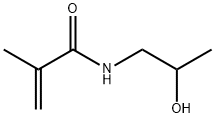
N-(2-hydroxypropyl)methacrylamide (HPMA) is an important hydrophilic monomer. Due to the non-toxic, non-immunogenic properties and prolonged circulation time of both its homopolymers and copolymers, it is widely employed in the preparation of PHPMA copolymers (a polymer-drug conjugate) for use in the biopharmaceutical industry. For instance, poly(HPMA-co-MA-GFLG-doxorubicin) represents the first intravenous tumour-targeting polymeric prodrug to enter clinical trials. HPMA polymers and copolymers are also employed in the fabrication of biocompatible medical materials such as hydrogels
[1].
Uses
Monomers to synthesize biocompetible polymers and copolymers for drug carriers, protein conjugates and hydrogels in biomedical applications.
in vivo
At 5 mg/kg body weight drug equivalent dose, all N-(2-Hydroxypropyl)methacrylamide copolymer-drug conjugates which contained lysosomally degradable side chains shows significant in vivo antileishmanial activity (>99% inhibition)[1].
References
[1] NGUYEN N H, RODRIGUEZ-EMMENEGGER C, BRYNDA E, et al. SET-LRP of N-(2-hydroxypropyl)methacrylamide in H2O†[J]. Polymer Chemistry, 2013, 8: 2424-2427. DOI:
10.1039/C3PY00220A.