Description
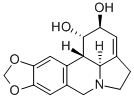
Lycorine (2188-68-3) arrests cell cycle at G2/M phase and induces apoptosis in tumor cells.1 Inhibits human enterovirus 71 replication by blocking elongation of the viral polyprotein during translation and reduces viral cytopathic effects in mice.2 Dose-dependently extends the circadian period length in mammalian cells by enhancing Bmal1 transcription.3 Selectively inhibits human ovarian cancer cell proliferation and neovascularization (IC50=1.2 μM).4A potent SREBF chaperone (SCAP) degrader (Kd=15.24 nM) which acts via an autophagy-independent lysosomal pathway.5
Chemical Properties
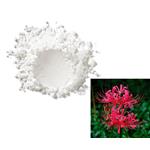
White crystalline powder, soluble in organic solvents such as methanol, ethanol, and DMSO, derived from Lycoris radiata bulbs.
References
[1] GIEDRIUS MILIAUSKAS. Identification of Radical Scavenging Compounds in Rhaponticum carthamoides by Means of LC-DAD-SPE-NMR[J]. Journal of Natural Products , 2005, 68 2: 168-172. DOI:
10.1021/np0496901[2] JIANGNING LIU. Lycorine reduces mortality of human enterovirus 71-infected mice by inhibiting virus replication.[J]. Virology Journal, 2011: 483. DOI:
10.1186/1743-422x-8-483[3] YOSHIAKI ONISHI Y Y Yasuhiro Kawano. Lycorine, a candidate for the control of period length in mammalian cells.[J]. Cellular Physiology and Biochemistry, 2012, 29 3-4: 407-416. DOI:
10.1159/000338495[4] ZHIFEI CAO . Lycorine hydrochloride selectively inhibits human ovarian cancer cell proliferation and tumor neovascularization with very low toxicity[J]. Toxicology letters, 2013, 218 2: Pages 174-185. DOI:
10.1016/j.toxlet.2013.01.018[5] LIANGDE ZHENG. The Paf1 complex transcriptionally regulates the mitochondrial-anchored protein Atg32 leading to activation of mitophagy.[J]. Autophagy, 2019. DOI:
10.1080/15548627.2019.1668228